 English
 Portuguese
 Bahasa
Melayu
 ไทย
 中文
 Tiếng Việt
 Español
 हिन्दी
 日本語
 العربية
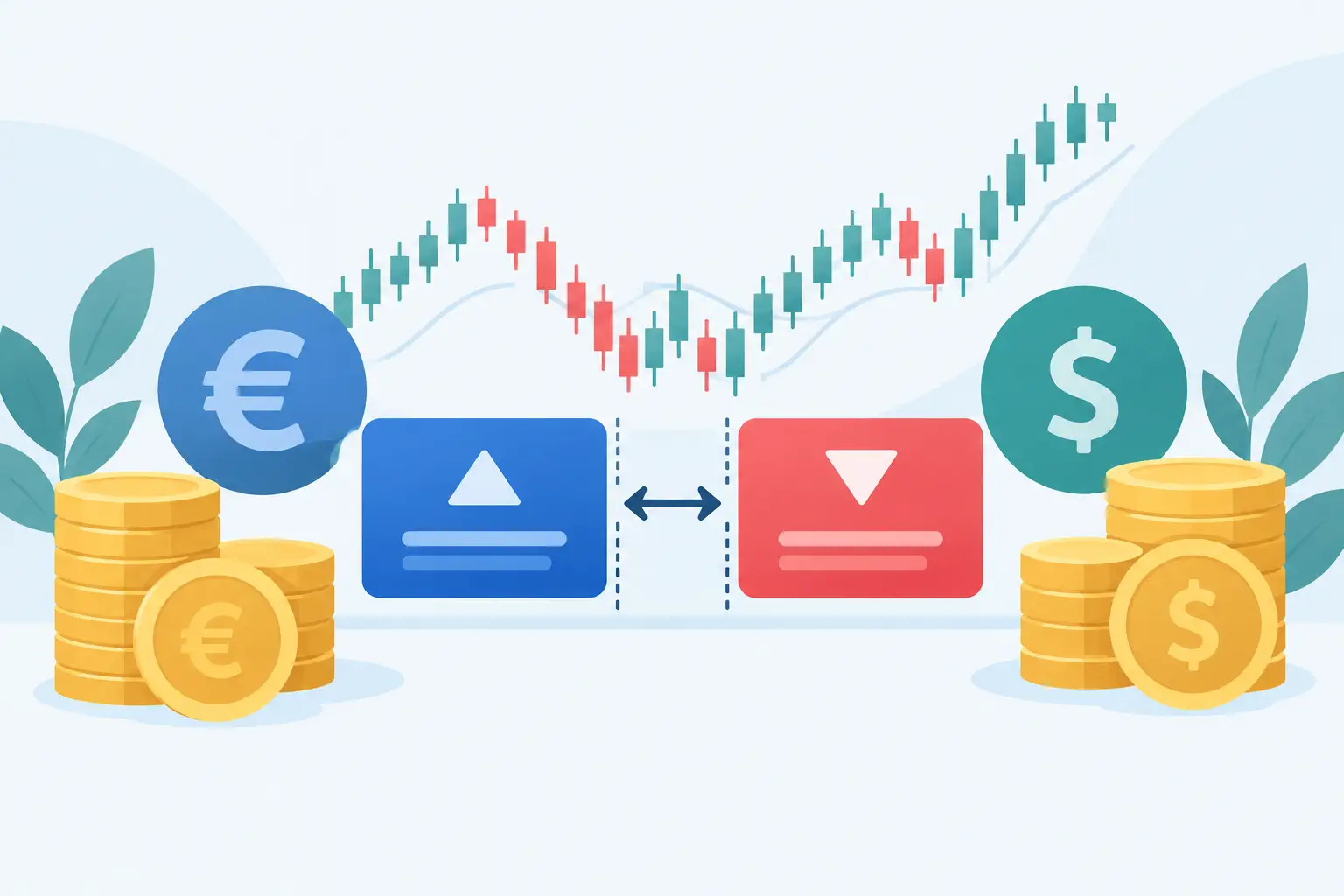
A two-pip move can look like an opportunity on a chart. But if the spread is 1.8 pips, most of that move is already committed before the market has done any work for you. How do forex spreads affect trading costs? They create an immediate cost at entry, influence your break-even level, and can determine whether a strategy that looks profitable in testing remains viable in live market conditions.
For active traders, spreads are not a minor line item. They are part of every position, every partial close, and every decision about which currency pair to trade. Understanding how they work helps you assess trading conditions with more precision and choose an approach that fits your account size, holding period, and preferred markets.
What a Forex Spread Really Represents
A forex quote has two prices: the bid and the ask. The bid is the price at which you can sell the base currency, while the ask is the price at which you can buy it. The difference between those prices is the spread.
If EUR/USD is quoted at 1.08500/1.08512, the spread is 1.2 pips. A trader who buys enters at 1.08512, but could immediately close only at the bid price of 1.08500. That 1.2-pip difference is the position’s initial unrealized cost before considering commissions, swaps, or any other applicable charges.
The spread is generally built into the quoted price rather than deducted as a separate cash fee. That makes it easy to overlook, especially for new traders. Yet the effect is real: the market must move far enough in your favor to cover the spread before the trade reaches break-even.
How Forex Spreads Affect Trading Costs on Every Trade
The monetary value of a spread depends on the pair, the account currency, and your position size. For many USD-quoted major pairs, one pip on a standard lot of 100,000 currency units is approximately $10. On a 1.2-pip EUR/USD spread, the approximate spread cost for one standard lot is therefore $12.
The same spread on a 0.10-lot position is roughly $1.20, while on a 0.01-lot micro position it is roughly $0.12. The calculation is straightforward:
Spread cost = spread in pips × pip value × trade size
The key point is that a small-looking spread can become meaningful as volume rises. A trader placing one standard-lot trade occasionally may treat a $12 spread cost differently from a short-term trader placing 20 similar trades in a session. At that frequency, the same spread can represent approximately $240 in gross trading cost before commissions or overnight financing.
This does not mean a tighter spread is always the only condition that matters. Execution quality, available liquidity, slippage, commissions, and the instruments you trade also shape the all-in cost of trading. But the spread is the cost you encounter first, and it should be part of every strategy calculation.
The Break-Even Distance Changes
A long position starts below break-even because it opens at the ask and closes at the bid. A short position has the same economic effect in reverse. If the spread is two pips, price needs to move at least two pips in your intended direction just to offset that opening difference, before other costs.
That changes the math of your take-profit and stop-loss levels. Consider a strategy targeting five pips with a five-pip stop. A two-pip spread consumes 40% of the intended gross target, which can materially reduce the strategy’s expected return. For a swing trader seeking a 150-pip move, the same two-pip spread usually has far less influence.
Why Strategy and Timeframe Matter
Spread sensitivity rises as target distances shrink. Scalpers and high-frequency discretionary traders usually feel spreads most directly because they pursue smaller price movements and trade more often. A spread that appears competitive for a multi-day position may be too wide for a strategy designed to capture a few pips at a time.
News traders face a separate challenge. Spreads can widen around high-impact releases, market opens, rollovers, and periods of thinner liquidity. Entering at a displayed spread before a major event does not guarantee that the spread will remain at that level when you exit. Fast markets may also increase the chance of slippage, which is different from the spread but can add to the realized cost.
For position traders, financing charges and larger directional risk may matter more than a small difference in spread. For intraday traders, a modest improvement in average spreads can have a larger effect on the bottom line. There is no universally best spread level. The right question is whether the total trading conditions support the way you actually trade.
Fixed vs. Floating Spreads
A fixed spread is quoted at a set level under normal conditions, giving traders more predictability when estimating entry costs. This can be useful for traders who want stable planning parameters, although terms and market conditions should always be reviewed carefully.
A floating spread changes with market liquidity and volatility. It may be very tight during active trading hours, particularly on highly liquid major pairs, then widen when liquidity falls or uncertainty rises. Floating pricing can offer attractive costs in normal conditions, but traders need to account for variability rather than assuming the lowest displayed spread will apply at every moment.
Neither model is automatically superior. A trader whose strategy depends on consistent cost assumptions may value predictability. Another trader who trades liquid sessions and accepts occasional widening may prefer variable pricing. Compare the typical spread, the conditions in which it can widen, and any commissions that apply to the account type.
Spreads Vary by Currency Pair
Major pairs such as EUR/USD, GBP/USD, and USD/JPY often have tighter spreads because they trade in high volume and generally have deep liquidity. Minor pairs may carry wider spreads, while exotic pairs can be materially wider due to lower liquidity, local market conditions, or heightened volatility.
That wider spread is not simply a platform detail. It raises the amount of price movement needed to reach break-even and can make tight-stop strategies harder to execute. A trade idea on an exotic pair may offer a compelling technical setup, but the potential reward should be assessed after spread cost, not before it.
The trading session also matters. Spreads are often most competitive when major financial centers overlap and market participation is deeper. During quieter periods, at daily rollover, or around holidays, spreads may widen. Checking live quotes on your trading platform before placing an order is more useful than relying only on a headline minimum spread.
Look at the All-In Cost, Not Just the Headline Spread
A low quoted spread is valuable only when viewed alongside the rest of the trading environment. Depending on the account and instrument, your total cost can include spread, commission, overnight swap or financing, conversion effects, and potential slippage. A zero or near-zero spread account may charge a commission per lot, while a spread-only account may include more of the cost in the bid-ask difference.
To compare two account options, estimate the total cost of your typical trade. Use your usual lot size, the pairs you trade, your average holding period, and the time of day you enter. Then test the result against your average target and stop distance. This gives you a practical answer rather than a comparison based on marketing figures alone.
For example, a trader holding EUR/USD positions for several days should include potential overnight financing in the comparison. A trader closing all positions within minutes may place more weight on average live spreads, commissions, and execution during active sessions. The better choice depends on the strategy, not on a single number.
Make Spread Awareness Part of Trade Planning
Before opening a position, view the live bid and ask prices and calculate the spread in pips. Build that cost into your projected risk-to-reward ratio rather than treating your chart entry as the true break-even point. If a trade has a very narrow profit target, ask whether current conditions leave enough room for the idea to work after costs.
It also helps to keep a trading journal that records the spread at entry, the session, the instrument, and the realized outcome. Over time, this can reveal whether certain pairs, hours, or event periods are increasing your costs. Traders using MT4 or MT5 can monitor live quotes directly and use their history to review how execution conditions aligned with their plan.
Monaxa gives traders access to global markets through familiar platforms and multiple account options, making it easier to match trading access to individual objectives. As with any leveraged trading activity, use risk controls, size positions carefully, and remember that leverage can amplify losses as well as potential gains.
A spread is not a reason to avoid a valid trade. It is a cost to price into the decision before you commit capital. When you know your average spread cost and plan around it, every entry starts with clearer expectations and a more disciplined path forward.