 English
 Portuguese
 Bahasa
Melayu
Bahasa
Melayu ไทย
ไทย 中文
中文 Tiếng Việt
 Español
 हिन्दी
 日本語
日本語 العربية
A strong strategy provider can make copy trading look simple: select a profile, set an allocation, and let the positions appear in your account. The decision is less simple than that. Your result depends on the provider’s risk behavior, the platform’s execution, your account settings, and the conditions offered by your broker.
This copy trading platform review focuses on the questions that matter before you commit capital. Copying can give traders access to new market ideas and active strategies without placing every trade manually. It does not remove market risk, and it does not turn past returns into a forecast.
What a Copy Trading Platform Review Should Cover
The best platform is not necessarily the one with the largest number of providers or the most eye-catching return chart. It is the one that gives you enough information to make a controlled decision, lets you set clear exposure limits, and connects to a trading environment that fits the instruments you want to trade.
Start with visibility. A provider profile should show more than a headline gain. Look for trading history, drawdown, active positions, average trade duration, instrument preferences, win rate, number of followers, and the amount of capital allocated. Each figure offers context, but no single statistic can tell the whole story.
A 90% win rate, for example, may sound attractive until you see that losing positions are held for weeks or increased in size to avoid closing at a loss. Likewise, a large return can come from disciplined trading or from a short period of excessive leverage. The quality of the data matters as much as the number itself.
Performance Data: Read Beyond the Return
Return is a starting point, not a final decision. A provider who gained 40% in one month may have taken risks that are unsuitable for your account. A provider with lower but steadier results, limited drawdowns, and a longer verified history may be easier to evaluate.
Pay close attention to maximum drawdown. This shows the largest decline in account value from a previous peak. It does not guarantee that future losses will stop at that level, but it offers a useful view of how much pressure the strategy has historically placed on capital. Consider whether you could realistically keep the strategy running through a similar decline without closing at the worst time.
Also review the length of the track record. A few profitable weeks in favorable market conditions are not enough to establish consistency. Look for performance across different volatility environments, major economic releases, and changing trends. Forex, indices, commodities, crypto CFDs, and stocks can react very differently when market sentiment changes.
The provider’s current open exposure is equally relevant. Historical charts may look orderly while several open positions carry meaningful unrealized losses. If the platform displays floating profit and loss, open lots, or exposure by instrument, use that information before following. A strategy can appear profitable on closed trades while holding risk that has not yet been realized.
Risk Controls Should Come Before Allocation
A capable copy trading setup gives you control over how much of your account is exposed. You should be able to choose an allocation amount or proportional setting rather than handing over unrestricted account risk. The right allocation is personal: it depends on your account size, financial situation, risk tolerance, and the volatility of the strategy.
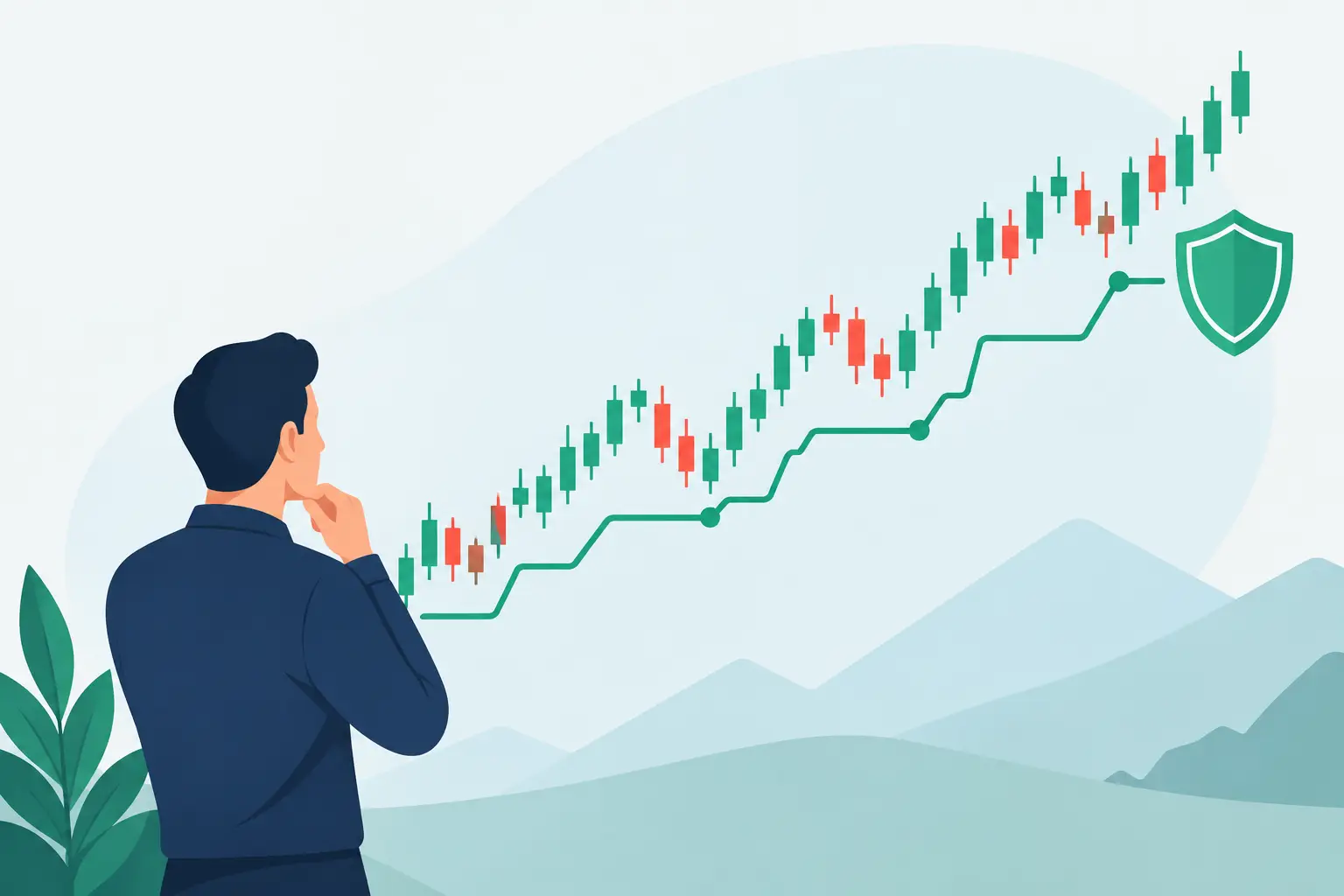
Set a loss limit before you start. If your platform offers an equity stop or automatic copy stop, decide in advance where you would pause the relationship. This is not about predicting the exact point at which a strategy will recover. It is about defining the maximum loss you are prepared to accept before market stress makes the decision for you.
Consider concentration as well. Following multiple providers does not automatically create diversification. Three providers may all trade the same major currency pairs, react to the same news event, or use similar high-leverage approaches. Review their instruments, trading hours, and holding styles. A mix of strategies helps only when the underlying risk is genuinely different.
Execution Can Change Your Results
Copy trading is affected by timing. When a provider opens or closes a position, your account may receive the trade at a slightly different price. This difference is known as slippage, and it can increase during volatile markets, low-liquidity periods, or rapid price moves.
The effect may be modest for a strategy that holds positions for days. It can be significant for short-term approaches that target small price movements. Before following a fast scalper, ask whether the platform, account type, spreads, commissions, and execution conditions are suitable for that style. A strategy that performs well in one account environment may deliver different results in another.
Minimum trade sizes also matter. Smaller accounts may not be able to mirror every position precisely, particularly when the provider uses larger volume or trades several instruments at once. Check whether the platform scales volume proportionally and how it handles trades that fall below the minimum permitted size.
Fees, Spreads, and the Real Cost of Following
A copy trading platform review should always include costs. Depending on the arrangement, you may face spreads, commissions, overnight financing, performance fees, management fees, or subscription fees. These costs can affect net returns, especially when providers trade frequently or keep leveraged positions open overnight.
Performance fees deserve careful attention. Understand how they are calculated, when they are charged, and whether a high-water mark applies. A high-water mark generally means a provider should earn a new performance fee only after recovering previous losses and reaching a new profit level. Clear fee terms make it easier to compare strategies on a like-for-like basis.
Do not choose a provider solely because it has no fee. A low-cost strategy with poor risk management is still expensive when losses occur. The goal is to assess total value: trading approach, transparency, risk profile, execution quality, and the cost of access.
Questions to Ask Before You Follow
Before activating a strategy, take time to answer a few practical questions. Can you explain how the provider appears to trade? Do they use stops consistently, hold losing trades indefinitely, or add to positions during drawdowns? Are their preferred instruments aligned with the markets you understand?
Next, decide what would make you stop copying. It could be a specific equity decline, a material change in the provider’s approach, a sudden increase in leverage, or a longer period of performance outside the strategy’s historical range. Setting these rules before capital is at risk can reduce emotional decisions later.
It is also sensible to begin with a smaller allocation where available. This gives you time to observe trade timing, drawdowns, costs, and your own response to fluctuations. Increasing exposure should be a considered decision, not a reaction to a short streak of gains.
Copy Trading Is Participation, Not a Guarantee
Copy trading can be a practical way to participate in global markets while learning from other trading approaches. It can also create a false sense of distance from risk. Every copied position affects your balance, margin, and available equity just as a manually placed trade would.
Markets can move sharply, leveraged products can magnify both gains and losses, and a provider’s prior performance cannot guarantee future outcomes. Treat strategy selection as an ongoing process rather than a one-time choice. Review performance, exposure, and risk settings regularly, especially after major market changes.
The right provider is not simply the one with the highest return. It is the one whose approach, risk level, costs, and trading behavior you can understand and fit into a plan you are prepared to follow with discipline.