 English
 Portuguese
 Bahasa
Melayu
Bahasa
Melayu ไทย
ไทย 中文
中文 Tiếng Việt
 Español
 हिन्दी
 日本語
日本語 العربية
A trader wants to take a view on EUR/USD before a central bank decision. The direction may be simple. Choosing the vehicle is not. In the forex CFDs versus futures decision, contract design, trading costs, position sizing, and even where you live can change the practical result of the same market call.
Both products can provide leveraged exposure to currency movements. Both can support short-term trading and hedging. Yet they operate through different market structures, and those differences matter most when volatility increases, positions are held overnight, or a strategy requires precise sizing.
Forex CFDs versus futures: the core difference
A forex CFD is a contract with a broker that tracks the price movement of an underlying currency pair. You do not take delivery of the currencies. Instead, your profit or loss reflects the difference between your entry and exit price, adjusted for applicable spreads, commissions, financing, and other trading conditions.
Currency futures are standardized contracts traded on a regulated futures exchange. Each contract has a specified size, expiration month, and exchange-traded price. A trader can open or close a position before expiration, but the contract itself follows the exchange’s rules for margin, settlement, and trading hours.
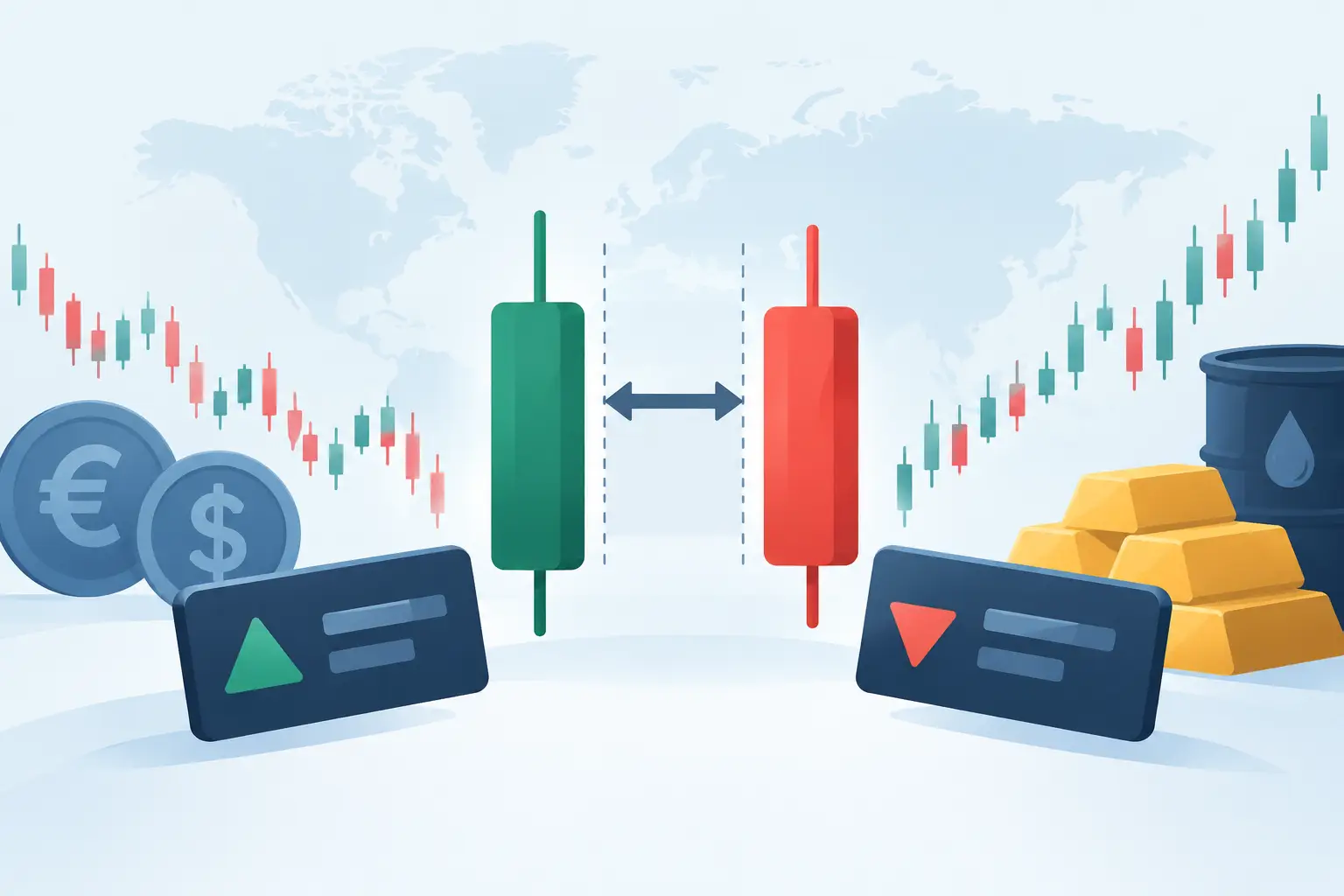
This distinction creates a practical split. CFDs are typically built around flexibility: traders can use smaller trade sizes, access a broad range of pairs, and trade through familiar retail platforms. Futures are built around standardization: contracts are centralized, terms are fixed, and market data can offer a clearer view of exchange activity.
Neither structure is automatically better. The better choice depends on how you trade, how long you hold positions, what size you need, and which products are available in your jurisdiction.
Position size and capital flexibility
For many retail traders, sizing is the first meaningful difference. Forex CFDs often allow positions in fractions of a standard lot, depending on the account and instrument. That can make it easier to align trade size with a defined dollar risk rather than forcing a position into a fixed contract increment.
Suppose your stop-loss distance calls for a small EUR/USD exposure to keep risk within your trading plan. With a CFD, smaller sizing may let you adjust more precisely. This is particularly useful for newer traders who are practicing risk control or experienced traders running several positions across forex, indices, commodities, or stock CFDs.
Futures contracts have set contract sizes. Some currency futures offer smaller versions of standard contracts, which improves accessibility, but the available increments can still be less granular than CFD lot sizing. A futures trader may need more capital or a wider risk tolerance to trade a particular contract comfortably.
Leverage changes the equation in both markets. It can increase market access, but it also magnifies losses. A smaller margin requirement is not a smaller risk. The risk is determined by your exposure, the market move, and the speed at which price moves against you.
Costs: spread, commission, and overnight financing
Comparing costs requires more than looking at a single number on a trading screen. Forex CFDs are often priced through a spread, with some account types also charging a commission. When a position remains open beyond the broker’s daily rollover time, overnight financing or swap adjustments may apply. The direction and size of that adjustment vary by instrument and market conditions.
Futures costs usually include a commission, exchange fees, and sometimes platform or market-data fees. There is no daily CFD-style swap charge, but futures pricing incorporates interest-rate expectations and time to expiration. Traders holding a position through contract expiry must also manage rollover into a later contract if they want to maintain exposure.
For a trader who opens and closes positions within the same session, spreads, commissions, and execution quality may be the primary comparison. For someone holding a currency view for days or weeks, financing, contract rollovers, and the difference between spot-based and futures-based pricing deserve closer attention.
Do not assume the lowest advertised spread produces the lowest overall cost. Consider your typical trade size, holding period, frequency, and the conditions that apply during active news periods.
Trading hours and market access
Forex CFDs generally follow the global forex market, which operates nearly 24 hours a day from Monday through Friday. This creates broad access across the Asian, European, and North American sessions. It can suit traders who want to respond to economic releases or trade outside standard U.S. equity hours.
Currency futures also trade for extended hours, although schedules, maintenance breaks, and liquidity patterns are set by the exchange. Liquidity may concentrate around major regional sessions and key economic events, while activity can thin out at quieter times.
CFDs also give traders a way to access a wide menu of currency pairs through one trading account and platform environment. Major pairs may be the focus for many strategies, but cross pairs and selected emerging-market currencies can offer additional opportunities when liquidity and volatility fit the plan.
Platform familiarity matters here. Traders who use MT4 or MT5 for charting, automated strategies, and order management may prefer the straightforward workflow of forex CFDs. Futures traders may choose an exchange-connected environment because their strategy depends on contract-specific data, order-book information, or centralized volume analysis.
Pricing, liquidity, and execution
In the spot forex market, there is no single central exchange that reports every transaction. CFD prices are quoted by the broker based on liquidity providers and market conditions. Reputable execution infrastructure, competitive pricing, and clear trading conditions are therefore central to the CFD experience.
Futures trade through a central exchange, so each contract has a visible exchange price. This can appeal to traders who value centralized reporting of volume and open interest. However, a centralized market does not guarantee a better fill on every order. Execution still depends on liquidity, order type, volatility, and the distance between your requested price and the available market.
During major announcements, both products can move quickly. Spreads may widen in CFDs, while futures can experience sharp price changes and fast-moving order books. Stop orders are designed to manage risk, but they do not guarantee execution at the exact stop price in every market condition.
The right question is not which market is perfect. It is whether you understand how your chosen product behaves when conditions are least forgiving.
Contract expiry and rollover risk
Forex CFDs do not have a fixed monthly expiration in the way futures contracts do. A position can generally remain open as long as margin requirements are met and applicable financing is paid. That simplifies the mechanics for traders who want ongoing exposure without selecting a new contract month.
Futures have defined expiration dates. Before expiry, traders who want to maintain their position normally close the current contract and open one in a later month. This is called rolling the position. Price differences between contract months can affect the result, especially when holding positions over longer periods.
Expiry is not necessarily a disadvantage. It is simply part of the futures framework. For systematic traders, the standardized calendar can be useful. For traders who want fewer operational steps, CFD pricing may feel more direct.
Availability matters, especially for U.S. residents
Product access is not the same everywhere. Forex CFDs are generally not available to U.S. retail residents through regulated U.S. brokers, while exchange-traded currency futures may be available through appropriately regulated futures providers. Rules can also differ based on residency, client classification, and the broker’s licensed entities.
If you are comparing products from the United States, check the legal availability of each instrument before building a strategy around it. If you trade from another eligible jurisdiction, review the broker’s product specifications, leverage limits, margin rules, and negative balance protections where applicable.
This is also where traders should separate marketing claims from practical due diligence. Read the contract specifications. Know the margin requirement. Understand what happens at rollover, during volatile markets, and if available equity falls below required margin.
Which product fits your trading style?
Forex CFDs may suit traders who value flexible position sizing, broad currency-pair access, and a familiar multi-asset platform. They can be especially practical for active traders who want to manage forex alongside other leveraged markets from one account environment. Monaxa provides access to global CFD markets through widely used MT4 and MT5 platforms for eligible clients.
Currency futures may suit traders who prefer standardized exchange-traded contracts, centralized volume data, and a defined contract structure. They may also be the more relevant route for traders in jurisdictions where retail CFDs are restricted.
Your strategy should lead the decision. A short-term trader focused on small, precisely managed positions may prioritize CFD sizing and trading conditions. A trader using volume-based analysis or requiring exchange-traded instruments may prefer futures. A longer-term trader should compare ongoing financing against the mechanics and costs of futures rollover rather than treating either as a default answer.
Before placing the first trade, test the numbers with your actual setup: entry price, stop distance, position size, margin used, estimated holding cost, and the loss if the stop is filled worse than expected. That small exercise turns forex CFDs versus futures from a product debate into a decision that matches the way you trade.