 English
 Portuguese
 Bahasa
Melayu
Bahasa
Melayu ไทย
ไทย 中文
中文 Tiếng Việt
 Español
 हिन्दी
 日本語
日本語 العربية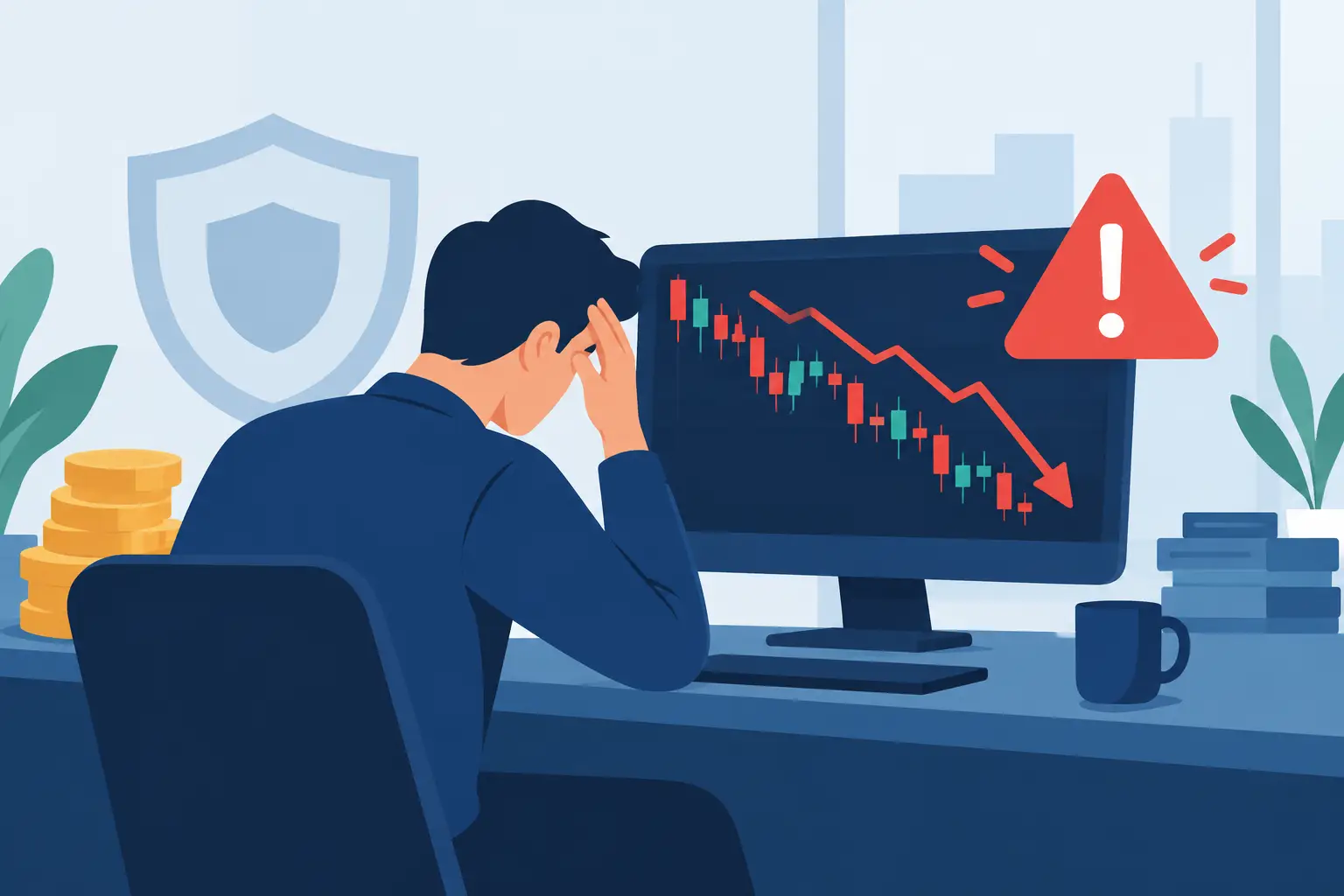
A margin call rarely arrives because of one dramatic mistake. More often, it is the result of a position becoming too large for the account, a market moving faster than expected, or several open trades drawing on the same limited equity. Understanding what causes margin calls helps you make clearer decisions before a trade reaches that point.
For forex and CFD traders, margin is the capital set aside to maintain leveraged positions. Leverage can give you access to a larger market position with a smaller initial deposit, but it also means modest price movements can have an outsized effect on your account equity. The goal is not simply to avoid a notification from your broker. It is to manage exposure so that one volatile session does not take control away from your trading plan.
What Causes Margin Calls in Leveraged Trading?
A margin call occurs when your account equity falls to a level that is too low to support your open positions under the broker’s margin requirements. Account equity is generally your account balance plus or minus the unrealized profit and loss on open trades.
When losses reduce equity, your margin level declines. Margin level is commonly calculated by dividing equity by used margin and multiplying by 100. If that percentage falls below a broker-defined threshold, the broker may issue a margin call, restrict new positions, or begin closing positions under its stop-out policy.
The exact threshold and process depend on the account type, instrument, and broker’s trading conditions. That difference matters. A trader should know the margin-call and stop-out levels before entering a leveraged position, rather than learning them during a sharp market move.
A Simple Margin Example
Suppose you deposit $1,000 and open positions requiring $500 in used margin. At the start, your equity is $1,000, giving you a margin level of 200%.
If unrealized losses reach $500, your equity falls to $500. Your margin level is now 100%. If losses continue, the margin level can fall toward the broker’s margin-call or stop-out threshold. The position may still be open while your margin level is above the stop-out level, but the available room to absorb more volatility has become very limited.
This is why a trade can look manageable at entry and become dangerous later. The entry margin requirement does not represent the maximum amount you can lose. It is collateral for a leveraged position, not a cap on risk.
The Main Triggers Behind a Margin Call
Market Losses Reduce Your Equity
The direct trigger is an unrealized loss. If the market moves against a long or short position, the floating loss reduces account equity in real time. A currency pair can move after an unexpected interest-rate decision, an index can gap on an earnings shock, or crypto CFDs can experience sudden weekend volatility. The larger the adverse move, the faster margin level falls.
Losses can also build across several trades. A trader may have positions in EUR/USD, GBP/USD, and a European equity index that appear separate on the platform. Yet all three can be affected by the same risk-off move, central bank event, or shift in U.S. dollar sentiment. Multiple correlated positions can create more concentrated exposure than the trade count suggests.
Excessive Leverage Magnifies Small Moves
Leverage is often the reason a relatively small market move creates a significant account loss. A highly leveraged position needs only a limited move in the wrong direction to consume a meaningful share of account equity.
For example, a 1% move may seem minor in an underlying market. But when position size is large relative to available equity, that 1% can represent a substantial loss. Leverage is not automatically reckless. It can be useful for capital efficiency and for strategies built around defined risk. The trade-off is that leverage leaves less room for error when sizing and stop placement are not carefully planned.
Opening Too Many Positions Uses Available Margin
Every new position can increase used margin. Even if each trade looks small by itself, a collection of positions can leave very little free margin available for normal price fluctuations.
Free margin is the part of your equity not currently committed as used margin. It is the buffer that helps your account withstand unrealized losses. Traders sometimes focus on whether a platform allows another order to be opened, rather than whether they have enough free margin to manage the position responsibly after entry.
This issue is common during active trading sessions, when several opportunities appear at once. More positions do not necessarily create better diversification. If they move in the same direction during volatility, they may produce a single large drawdown.
Volatility, Gaps, and Spreads Can Accelerate Losses
Not all price action is orderly. Major economic releases, central bank announcements, geopolitical developments, and low-liquidity periods can produce rapid moves. Prices may gap through a planned exit level, particularly when markets reopen after a weekend or a major announcement.
Spreads may also widen in fast conditions. For traders holding short-term positions, wider spreads can affect the displayed profit and loss and reduce equity at exactly the time the market is already moving against them. This does not mean volatility should always be avoided. It means exposure should reflect the conditions of the instrument and the event risk on the calendar.
Holding Trades Through Financing Adjustments
Depending on the product and account conditions, positions held overnight may be subject to financing charges or swaps. These costs are typically not the main cause of a margin call, but they can steadily reduce account balance and equity over time, especially for large positions held for extended periods.
A position that is already close to a margin threshold has little room for additional costs. Before using a longer-term leveraged strategy, factor carrying costs into the risk calculation instead of focusing only on the expected price direction.
Margin Call vs. Stop-Out: Know the Difference
A margin call is generally a warning that your margin level has reached a specified threshold. A stop-out is the point at which the broker may begin automatically closing open positions to prevent the account from falling further below required margin.
The practical sequence varies. Some brokers notify traders at one margin level and close positions at a lower level. Others may apply rules based on available margin, account equity, or instrument-specific requirements. In a quickly moving market, there may be little time between a warning and automatic closures.
Automatic liquidation is designed to manage margin risk, but it may not close the trade you would have chosen first. That is why waiting for a margin call is not an effective exit strategy. Position management needs to happen while you still have flexibility.
How to Reduce the Risk of a Margin Call
Start with position size, not trade conviction. Decide how much of your account you are prepared to risk if the market reaches your invalidation level, then calculate a position size that fits that risk. A strong market view does not make an oversized trade safer.
Use stop-loss orders where they fit your strategy, while recognizing that stop orders are not guaranteed to execute at the exact requested price in all market conditions. Stops provide structure, but they do not eliminate gap risk or the need for sensible sizing.
Keep meaningful free margin after opening a trade. There is no universal percentage that fits every strategy, because volatility differs across forex, commodities, indices, crypto CFDs, and stock CFDs. Still, an account running close to its minimum margin requirement has little capacity to handle routine market noise.
Monitor total exposure rather than viewing every chart in isolation. If several trades depend on a weaker U.S. dollar, higher equity prices, or a single commodity trend, consider them as one broader risk position. Reducing duplication can protect margin without requiring you to abandon your market view.
Finally, check margin requirements before trading instruments around major events. Requirements can vary by asset, and market conditions can change quickly. Platforms such as MT4 and MT5 make it easier to monitor equity, free margin, and open exposure in real time, but the numbers only help if they are part of your trading decisions.
A Margin Call Is a Risk Signal, Not a Trading Plan
Margin calls are caused by falling equity relative to the margin required for open leveraged positions. Market losses are the immediate driver, while high leverage, oversized trades, correlated exposure, volatility, and limited free margin make the outcome more likely.
The most useful habit is to treat margin as a live measure of flexibility. Before the next trade, ask how much room the account has if the market is wrong, volatile, or temporarily illiquid. Keeping that room available can help you stay focused on opportunity instead of reacting under pressure.