 English
 Portuguese
 Bahasa
Melayu
Bahasa
Melayu ไทย
ไทย 中文
中文 Tiếng Việt
 Español
 हिन्दी
 日本語
日本語 العربية
A price move can matter more than the asset itself. That is the starting point of this beginner guide to CFD trading: CFDs let you trade whether a market rises or falls without taking ownership of the underlying share, currency, index, commodity, or cryptocurrency. That flexibility creates opportunity, but it also makes disciplined risk control nonnegotiable.
A CFD is a leveraged product. Small market moves can produce meaningful gains or losses relative to the money committed to a position. Before placing a live order, understand the mechanics, choose a market you can follow, and set the amount you are prepared to risk on every trade.
What Is CFD Trading?
CFD stands for contract for difference. It is an agreement based on the change in an instrument’s price between the time you open a position and the time you close it. You are trading the price difference, not buying or selling the underlying asset itself.
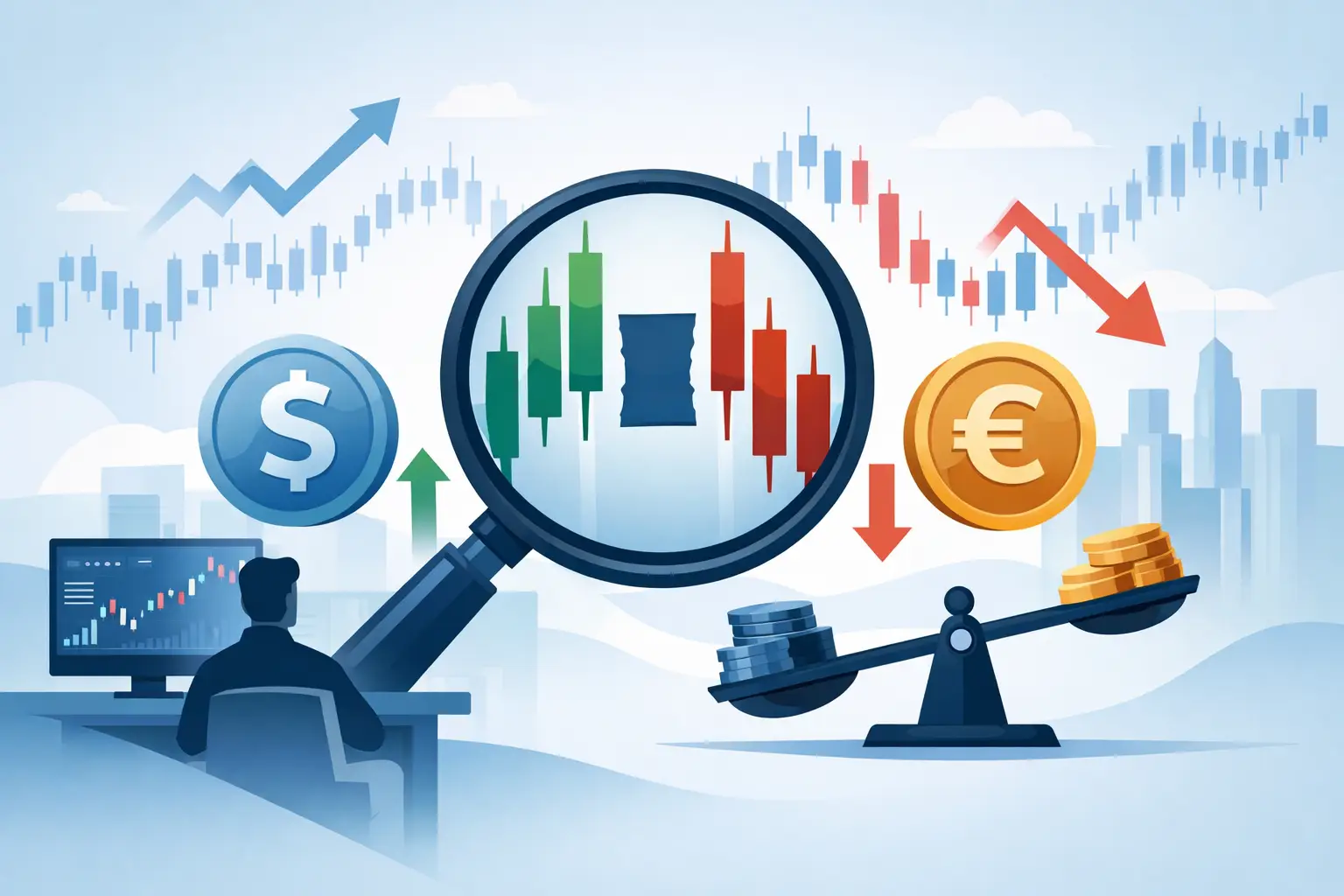
For example, suppose you believe a major stock index will rise after an economic release. You can open a buy position on an index CFD. If the quoted price rises and you close above your entry, the difference is your gross profit. If the price falls, the difference becomes a loss. A sell position works in reverse: it may profit when the market declines, but it loses if the market rises.
This structure can provide access to forex, indices, commodities, crypto CFDs, stock CFDs, and ETF CFDs from a single trading environment. The instrument selection matters because each market has its own trading hours, liquidity, volatility, costs, and news drivers.
Beginner Guide to CFD Trading: The Core Mechanics
The first terms you will see on a trading platform are not just technical language. They directly affect your result.
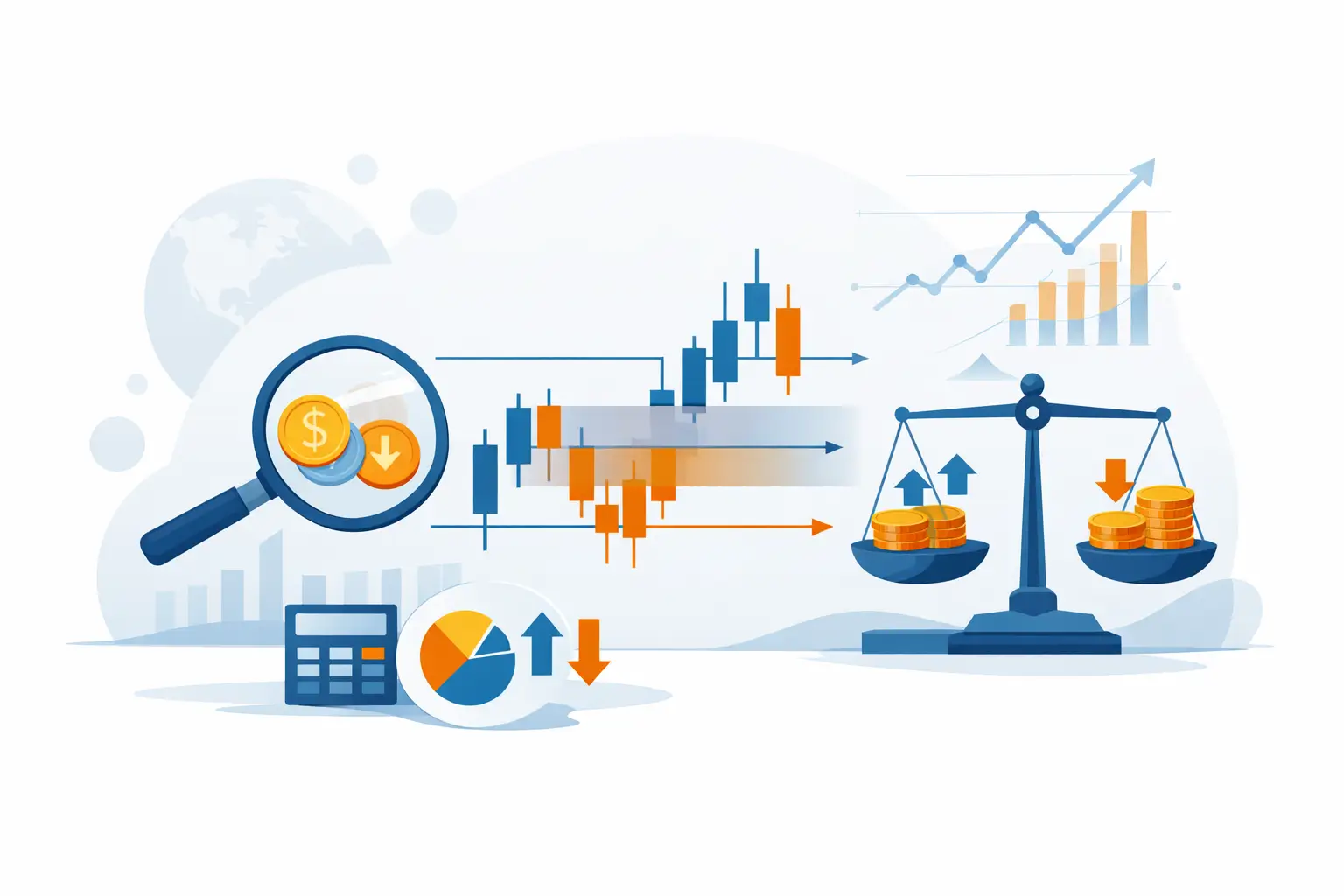
The bid is the price at which you can sell, while the ask is the price at which you can buy. The difference between them is the spread. A position normally begins with a small unrealized loss because the market must move enough to cover that spread. Depending on the account and instrument, other charges may apply, including overnight financing for positions held beyond a trading day.
Your position size determines how much each price movement is worth. On forex, this may be expressed in lots. On shares, indices, or commodities, it may be expressed in contracts, units, or another instrument-specific measure. Never assume that one contract has the same value across markets. Check the contract specifications before you trade.
Margin and leverage
Margin is the amount of your account balance set aside to open and maintain a leveraged position. Leverage allows you to control a larger exposure with a smaller initial deposit. For instance, if a position requires 5% margin, $500 may provide exposure equivalent to $10,000.
That does not mean the trade is less risky. The profit or loss is calculated on the full $10,000 exposure, not only on the $500 margin. A 1% adverse move on that exposure is roughly a $100 loss before costs. Larger leverage can reduce the upfront margin requirement, but it can also make it easier to take a position that is too large for your account.
If losses reduce available margin too far, your broker may require additional funds or close positions under its margin policy. The practical lesson is simple: treat leverage as a sizing tool, not as a reason to maximize exposure.
Long and short positions
Going long means buying because you expect the price to rise. Going short means selling because you expect the price to fall. CFDs make both directions accessible, but being able to trade a falling market does not make forecasting easier.
A short position can be particularly demanding during fast rallies. Markets can move sharply after earnings, central bank announcements, inflation data, geopolitical developments, or unexpected headlines. Use a defined exit plan in either direction.
Choose One Market Before You Choose Every Market
New traders often make the mistake of opening charts for currencies, gold, oil, indices, shares, and crypto all at once. More choice can lead to more noise. Start with one or two instruments whose behavior and trading hours fit your schedule.
Forex pairs can offer deep liquidity and regular economic data to follow. Indices provide exposure to broad market sentiment. Gold and oil can react strongly to inflation expectations, supply conditions, and risk events. Crypto CFDs may offer substantial volatility, including outside traditional market hours. Stock CFDs can be influenced by company-specific events such as earnings announcements.
There is no universally best market for beginners. The better choice is the one you can research consistently, understand at a basic level, and trade at times when you are able to monitor your position. If you cannot explain what normally moves an instrument, practice with it before risking capital.
Build a First-Trade Process
A professional platform such as MT4 or MT5 can present many order types, indicators, and chart layouts. You do not need to use every feature immediately. A repeatable process is more valuable than a crowded screen.
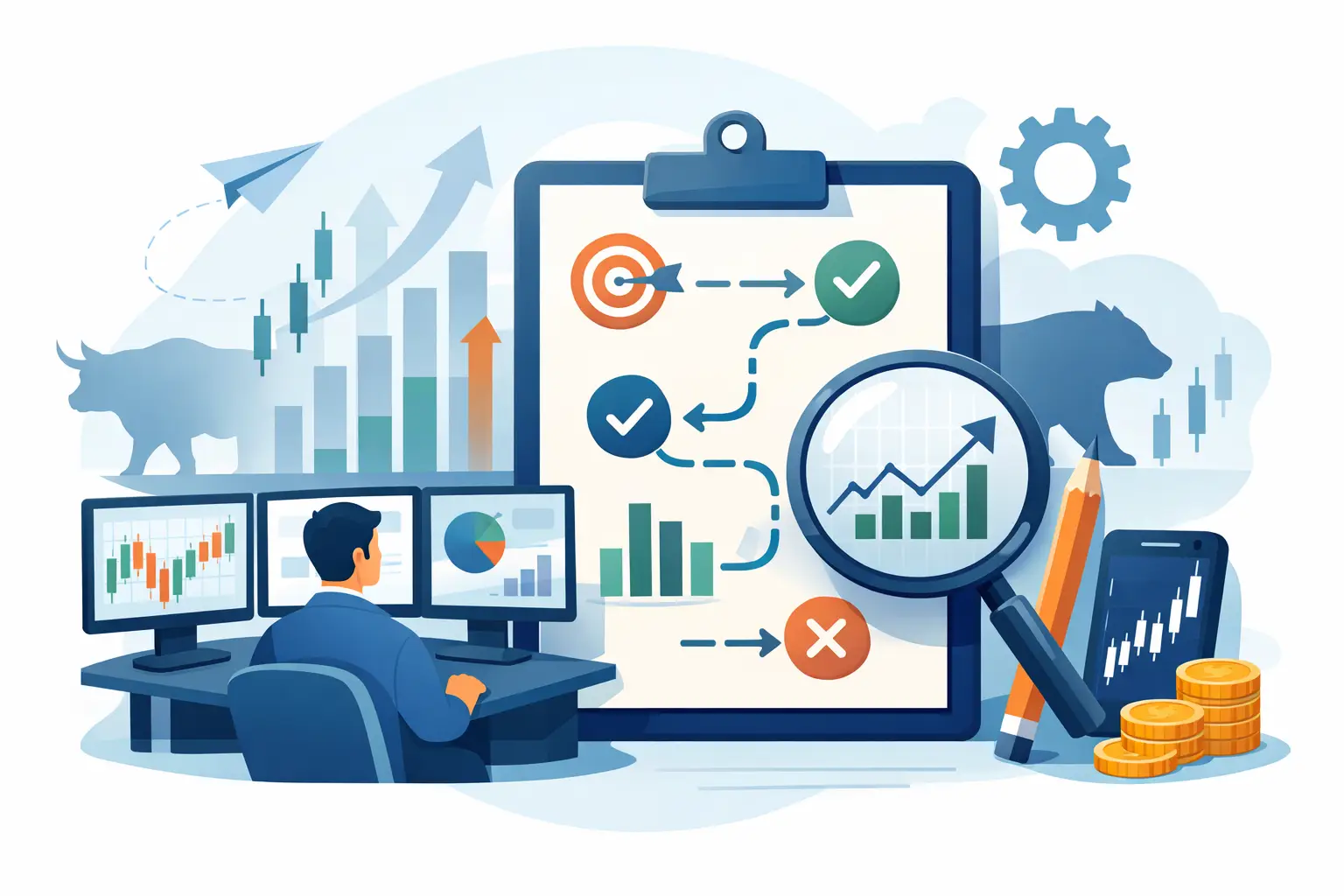
Before entering a trade, answer four questions: What is the market doing? What specific condition would trigger my entry? Where is my exit if I am wrong? How much money could I lose if that exit is reached?
Then calculate your position size from the risk amount, not from the maximum leverage available. If you decide that a single trade should risk no more than $20, set the stop-loss level first and choose a volume that limits the potential loss near that amount. The exact calculation depends on the instrument’s point value, contract size, and currency conversion, so verify it in the platform specifications.
A stop-loss order is not a guarantee of a precise exit price in every market condition. During sharp volatility or price gaps, an order can be filled at a different available price. Still, a stop-loss is one of the clearest ways to define risk before emotion enters the decision.
A take-profit order can also help turn a trading idea into a complete plan. Rather than closing a winning position because of a momentary impulse, decide in advance what price level would meet your objective. Some traders use a risk-to-reward framework, such as seeking a potential reward that is larger than the planned risk. That ratio alone does not make a strategy profitable, but it forces clarity.
Practice Before Funding a Larger Account
A demo account is the right place to learn platform basics: finding an instrument, reading the quote, selecting volume, placing market or pending orders, modifying stops, and reviewing open exposure. Practice should be realistic. Use position sizes comparable to what you would use with real money, and record each trade.
Your trading journal does not need to be complicated. Record the instrument, direction, entry reason, stop-loss, target, position size, outcome, and what you would repeat or change. After a meaningful sample of trades, patterns become visible. You may find that your entries are sound but your sizing is too aggressive, or that you trade well during one market session and poorly during another.
When you move to a live account, begin small enough that a normal losing trade does not change your behavior. Real-money trading introduces pressure that a demo cannot fully recreate. The goal of your earliest live trades is not to generate fast income. It is to prove that you can follow your rules with real consequences.
Common CFD Trading Mistakes to Avoid
The most expensive beginner errors are usually behavioral, not technical. Avoid increasing trade size after a loss to recover quickly. Avoid moving a stop-loss farther away simply because the market is approaching it. Avoid opening multiple positions that all depend on the same idea, such as several trades that rise or fall with the US dollar.
Also be careful with overnight exposure. Financing charges, thinner liquidity, and news outside your regular trading hours can change the risk profile of a position. Holding a trade can be appropriate when it fits your strategy, but it should be an intentional choice rather than an accident.
Copy trading and managed-style participation can offer another way to engage with markets, but they do not remove risk. Past results do not ensure future performance, and another trader’s strategy may use a drawdown level or holding period that does not suit your goals. Understand the approach, controls, and potential losses before allocating funds.
Trade With a Plan, Not a Prediction
CFD trading gives active traders access to diverse global markets and the ability to act on both rising and falling prices. That access is most useful when paired with controlled position sizing, clear exits, and a platform you understand.
Start by learning one market, testing one straightforward setup, and keeping the risk per trade small. Markets will continue to offer opportunities tomorrow. Protecting your capital and building consistent decision-making puts you in a better position to recognize them.