 English
 Portuguese
 Bahasa
Melayu
Bahasa
Melayu ไทย
ไทย 中文
中文 Tiếng Việt
 Español
 हिन्दी
 日本語
日本語 العربية
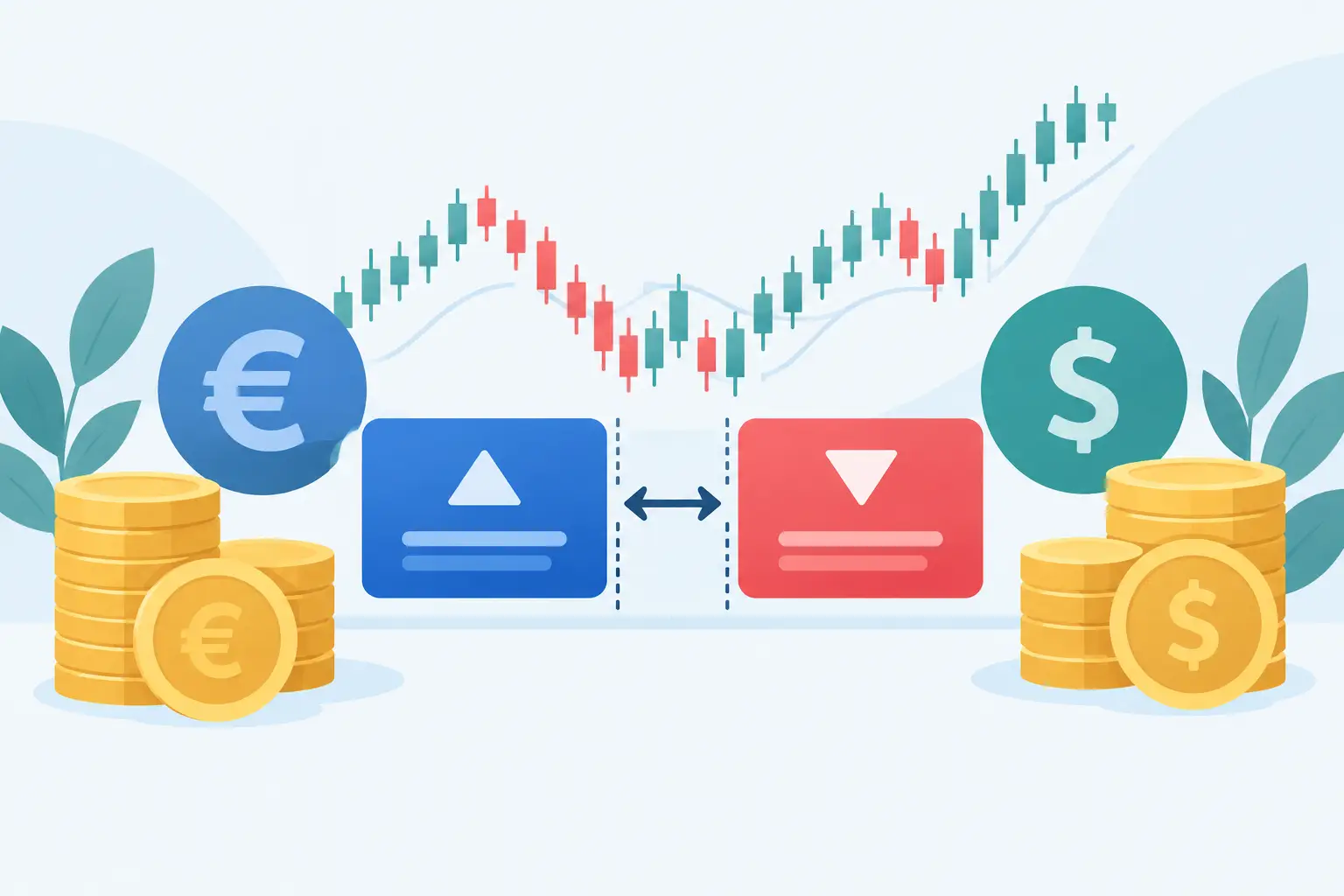
A forex chart can move only a few decimal places while the financial impact of a trade changes quickly. That is why understanding what is a pip in forex? spread, pipette and lot size explained is not just beginner vocabulary. These measurements determine your transaction cost, potential profit or loss, and the position size your account can reasonably support.
Before placing a live order, traders need to know what one price movement is worth in their chosen currency pair. A 10-pip move may be a small fluctuation on the chart, but its dollar value depends on the lot size. Add the spread and leverage to the picture, and risk can grow faster than many new traders expect.
What Is a Pip in Forex?
A pip is the standard unit used to measure a change in the exchange rate of a currency pair. For most forex pairs, one pip is the fourth decimal place, or 0.0001.
If EUR/USD rises from 1.0800 to 1.0801, it has moved one pip. If it rises from 1.0800 to 1.0850, it has moved 50 pips. Traders use pips to describe price movements consistently, regardless of whether they are discussing a trade idea, a stop-loss level, or a target.
Pairs involving the Japanese yen are the main exception. Since yen pairs are traditionally quoted with fewer decimal places, one pip is usually the second decimal place, or 0.01. If USD/JPY moves from 156.20 to 156.21, that is a one-pip increase.
Pips provide a common language, but they do not tell you the monetary result on their own. A 20-pip move on a small position may have little effect on account equity. The same move on a large position can be significant.
Why pips matter more than raw price changes
Looking only at a chart price can make a move appear larger or smaller than it really is. A move from 1.0800 to 1.0810 may look minor, but it equals 10 pips. When a trading plan calls for a 30-pip stop-loss and a 60-pip target, pips make the risk and potential reward immediately comparable.
This also helps traders avoid a common mistake: choosing a position size first and deciding on risk later. A more disciplined approach is to identify the trade idea, set a logical stop-loss in pips, decide how much account capital to risk, and then calculate the lot size.
What Is a Pipette?
A pipette is one-tenth of a pip. Many forex platforms quote major currency pairs to five decimal places instead of four, and yen pairs to three decimal places instead of two. The final quoted digit is the pipette.
For example, if EUR/USD is quoted at 1.08005, the fifth decimal place, 5, is a pipette. A change from 1.08005 to 1.08006 is one pipette, or 0.1 pip. A move from 1.08005 to 1.08015 equals one full pip.
For USD/JPY, a quote of 156.205 includes a pipette in the third decimal place. Moving from 156.205 to 156.215 is one pip.
Pipettes give traders more precise pricing, particularly when spreads are tight. They do not change the underlying risk calculation. A stop-loss of 25 pips remains 25 pips whether a platform displays four or five decimal places. The only difference is the level of price detail visible on the quote.
Forex Spread Explained
The spread is the difference between the bid price and the ask price. The bid is the price available when selling, while the ask is the price available when buying. This gap is a core trading cost and is generally measured in pips.
Suppose EUR/USD has a bid price of 1.08000 and an ask price of 1.08012. The spread is 1.2 pips. If you buy at the ask and immediately close at the bid, the position begins with an unrealized loss equivalent to that 1.2-pip spread, before any other applicable charges.
Spreads vary by instrument, market liquidity, account type, and market conditions. Major forex pairs often have narrower spreads than less frequently traded pairs. Spreads can also widen around high-impact economic releases, market opens, rollover periods, and unexpected volatility. A spread that looks attractive during a quiet session is not necessarily the spread available when a fast market is moving.
Spread versus commission
Some trading accounts build most execution costs into the spread. Others may offer lower raw spreads and apply a commission per lot traded. Neither model is automatically better. The relevant figure is the total cost of opening and closing the trade, along with execution quality, platform fit, and the instruments you plan to trade.
For short-term strategies, a small difference in spread or commission can matter because costs are paid repeatedly. For a longer-term trade targeting hundreds of pips, the entry cost may be a smaller part of the overall decision. It still needs to be included in the plan.
Lot Size Determines What a Pip Is Worth
A lot is the unit that describes trade volume. In forex, the standard convention is:
- A standard lot equals 100,000 units of the base currency.
- A mini lot equals 10,000 units.
- A micro lot equals 1,000 units.
- A nano lot, where available, equals 100 units.
For many USD-quoted major pairs, such as EUR/USD, the approximate pip value is $10 for one standard lot, $1 for one mini lot, and $0.10 for one micro lot. Therefore, a 25-pip loss on a standard lot is approximately $250, while the same 25-pip move on a micro lot is approximately $2.50.
The word “approximately” matters. Pip value can change depending on the currency pair, the account’s deposit currency, and the current exchange rate. For pairs where USD is not the quote currency, a platform’s contract specifications or built-in calculator can provide the more precise value.
A practical risk example
Assume a trader has a $2,000 account and chooses to risk 1%, or $20, on one trade. Their chart analysis supports a stop-loss 20 pips from entry. To keep the loss near $20 if the stop is reached, the trader needs a position where each pip is worth about $1.
On EUR/USD, that is roughly one mini lot, or 0.10 lots. If the trader instead opened one standard lot, the 20-pip stop would represent about $200 of risk, or 10% of the account. The trade setup may be identical, but the position sizing changes the exposure completely.
This is why lot size should follow risk parameters, not confidence in a trade. Markets can move against a position even when the analysis is reasonable.
How Leverage Fits Into the Calculation
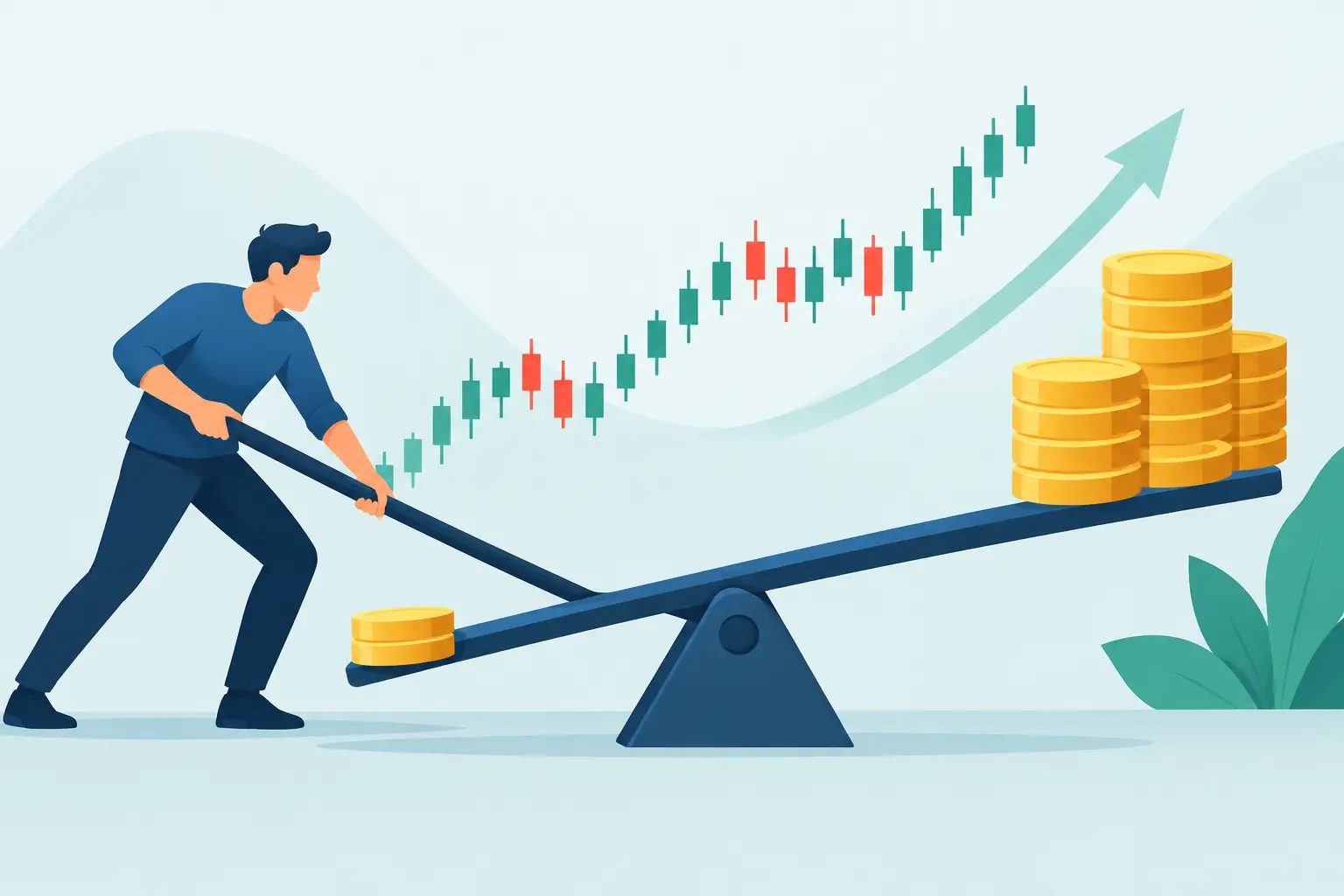
उत्तोलन allows traders to control a larger market position with a smaller amount of margin. It can make market access more capital-efficient, but it does not reduce the dollar value of a pip or the loss generated by an unfavorable move.
A trader may have enough margin to open a large position, but that does not mean the position is appropriate for their account. Margin availability and risk tolerance are different calculations. A 50-pip move against an oversized trade can consume a meaningful portion of account equity before a trader has time to reassess.
Use leverage as a tool for flexibility, not as a reason to increase risk without a defined plan. Set the stop-loss based on market structure, calculate the pip risk, then choose the lot size that aligns with your maximum loss for that trade.
Using Pips, Spreads, and Lots on Your Platform
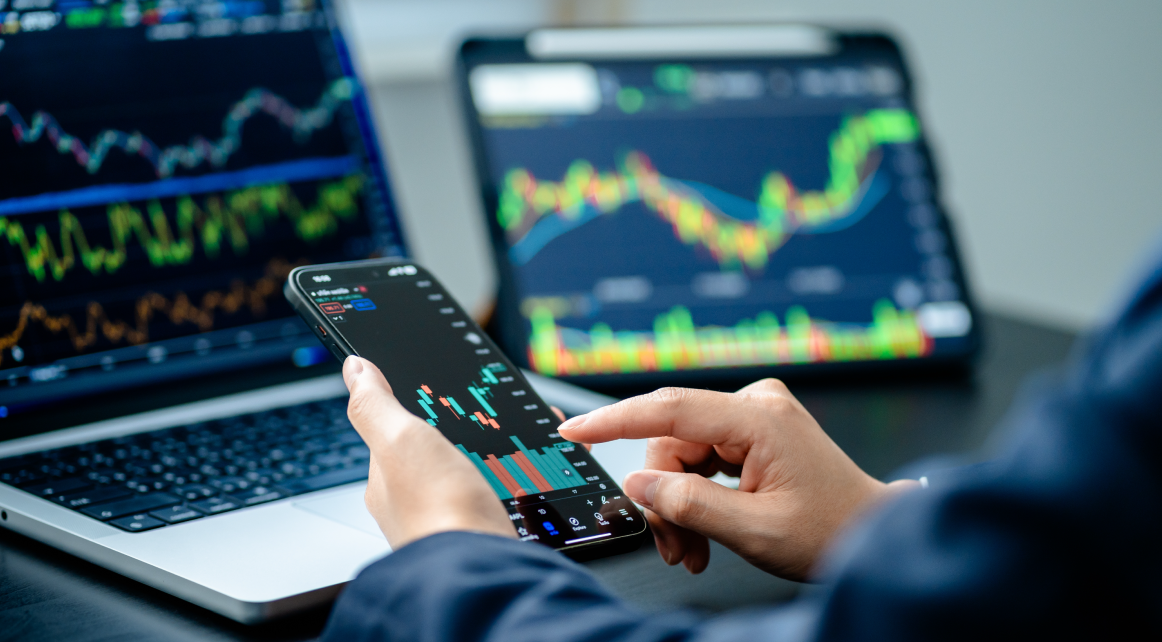
On platforms such as MT4, MT5, and cTrader, traders can see live bid and ask pricing, select volume in lots, and set stop-loss and take-profit orders at defined price levels. The platform may display five-digit quotes, so remember that the final digit on most non-yen pairs is a pipette.
Before entering an order, check the instrument specification, current spread, trade volume, and margin requirement. Then confirm the dollar amount at risk if the stop-loss is triggered. This takes only a moment, yet it can prevent a position from being much larger than intended.
With Monaxa, traders can access familiar platforms and a broad range of markets, but the principle remains the same across every trading environment: understand the value of each price movement before committing capital. A precise position-size calculation will do more for long-term discipline than trying to predict every next pip.