 English
 Portuguese
 Bahasa
Melayu
Bahasa
Melayu ไทย
ไทย 中文
中文 Tiếng Việt
 Español
 हिन्दी
 日本語
日本語 العربية
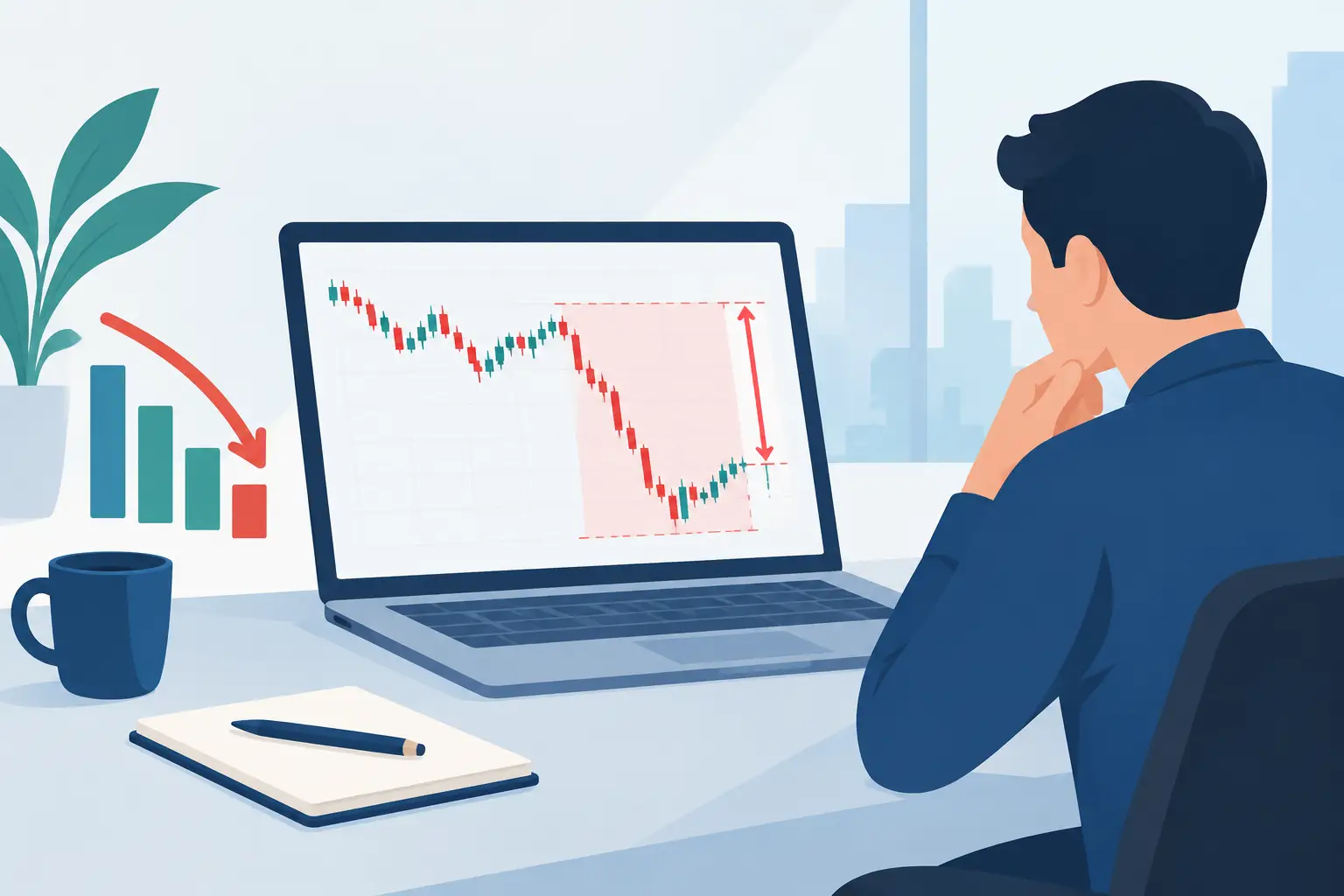
A market can move in your direction and still leave you with a small loss the moment you open a position. The reason is usually the bid-ask difference. If you are asking, what is the spread, it is one of the first trading costs to understand before placing orders in forex, CFDs, indices, commodities, or crypto markets.
The spread is visible on every live quote, but its effect is not always obvious until you calculate it against your position size. Knowing how it works helps you compare trading conditions, select an approach that fits your timeframe, and make more informed decisions when markets become fast or volatile.
What Is the Spread in Trading?
The spread is the difference between the bid price and the ask price of an instrument. The bid is the price available when you sell. The ask is the price available when you buy. The ask price is normally higher than the bid price, and that difference is the spread.
For example, imagine EUR/USD is quoted at 1.08420 / 1.08430. The first number is the bid and the second is the ask. The difference is 0.00010, or one pip.
When you buy, your position opens at the ask price. If you immediately closed that position, it would generally close at the bid price. With no market movement, the position initially reflects the cost of that gap. A sell position works in reverse: it opens at the bid and closes at the ask.
The spread is not a penalty or a prediction about market direction. It is a core part of how two-way market pricing works. For active traders, however, it is a real transaction cost that must be covered by favorable price movement before a trade can become profitable.
Why the Bid-Ask Spread Matters
A narrow spread means the bid and ask prices are close together. A wider spread means there is a larger gap to overcome. All else equal, a narrower spread reduces the immediate cost of entering and exiting a trade.
That matters most for strategies that trade often or target smaller price movements. Scalpers, short-term intraday traders, and algorithmic strategies may enter multiple positions in one session. Even a modest difference in spreads can add up across many trades.
For a trader holding a position for days or weeks, the opening spread may represent a smaller share of the total expected move. It still matters, especially during less liquid trading hours, but position traders may place more weight on swaps, market fundamentals, chart structure, and risk management.
A tight spread alone does not define better trading conditions. Execution quality, commissions, available liquidity, slippage, platform stability, and the instruments you trade all affect the practical cost of a position. The right account setup depends on how and when you trade.
How to Calculate the Cost of the Spread
The basic calculation is straightforward:
Spread cost = spread in pips or points × value per pip or point × position size
Suppose you trade one standard lot of EUR/USD and the spread is 1.0 pip. For many USD-denominated forex examples, one pip on a standard lot is approximately $10. The estimated spread cost is therefore about $10.
If you trade 0.10 lots under the same conditions, the pip value is approximately $1, so a 1.0-pip spread would cost about $1. If you trade 0.01 lots, often called a micro lot, the same spread would be approximately $0.10.
The exact value varies by instrument, account currency, contract specification, and trade size. Index, commodity, stock, and crypto CFDs are often quoted in points, cents, or dollars rather than forex pips. Check the instrument details on your trading platform before assuming a point value.
Here is the practical question to ask before entering a trade: how far does the market need to move just to cover my trading costs? The answer should fit naturally within your planned target and stop-loss distance.
Fixed Spreads vs. Variable Spreads
Spreads are commonly described as fixed or variable.
A fixed spread stays at a stated level under normal conditions. This can make cost planning easier, particularly for newer traders who want a consistent number to work with. However, fixed pricing may come with different execution terms, wider baseline costs, or restrictions around news and volatile market periods.
A variable spread changes as market conditions change. During highly liquid hours, such as periods when major forex sessions overlap, variable spreads can be very tight. But when liquidity thins or uncertainty rises, they can widen quickly.
Neither model is automatically superior. A trader focused on predictable cost estimates may value stable spreads. A trader who operates during active market hours and prioritizes competitive live pricing may prefer variable spreads. The key is to understand the conditions, not simply the headline number.
What Makes Spreads Widen?
Spreads reflect liquidity and market risk. When many buyers and sellers are active, prices can be quoted more closely together. When fewer participants are willing to transact, or prices are moving rapidly, the gap between bid and ask can widen.
This often happens around major economic releases, central bank decisions, unexpected geopolitical developments, market opens and closes, holidays, and periods of low liquidity. It can also occur in instruments that naturally trade with lower volume or higher volatility, including certain exotic currency pairs, individual stock CFDs, and crypto CFDs.
A widening spread does not always mean something is wrong with your platform. It may be an accurate reflection of current market conditions. Still, it can materially affect stop orders, short-term entries, and the cost of closing a position. Traders planning to trade major news events should factor in the possibility of wider spreads and fast price changes.
Spread, Commission, and Slippage Are Different Costs
These terms are often grouped together, but they describe different parts of the trading experience.
The spread is the difference between the buy and sell quote. A commission is a separate stated fee that may apply to certain account types or trades. Slippage is the difference between your expected execution price and the actual price at which an order is filled, particularly when markets move quickly.
An account with very low spreads may charge a commission. Another account may include more of the cost within a wider spread and advertise commission-free trading. Neither is inherently cheaper without looking at the full cost for the instrument and position size you use.
For example, a low-spread account can suit frequent traders if the commission remains competitive relative to their volume. A spread-only structure can be simpler for traders who value straightforward cost visibility. Compare the total estimated round-trip cost, not just the smallest spread displayed in promotional material.
How the Spread Affects Different Trading Styles
For scalping, spread discipline is essential. If your average target is only a few pips, a wide spread can consume a significant percentage of each potential gain. Traders using this style often focus on highly liquid instruments, active sessions, and account conditions designed for frequent execution.
For day trading, the spread still has a direct effect, although trade selection and timing can matter just as much. Avoiding thin market periods and entering after the initial volatility of major news may help reduce exposure to unpredictable spread expansion.
For swing trading, spreads are usually less dominant relative to larger targets. But wider spreads can still change the quality of an entry, especially when trading volatile assets or placing stops close to the market.
For copy trading or PAMM participation, investors should also consider how spreads and other costs can influence a strategy’s historical and future results. A strategy that performs well under one set of trading conditions may not produce identical outcomes under another. Past performance is not a guarantee of future results.
Practical Ways to Manage Spread Costs
You cannot eliminate the spread, but you can manage its impact. Start by trading instruments whose typical spreads align with your strategy. Major forex pairs often have different liquidity characteristics than minor or exotic pairs, while CFD pricing can vary substantially by asset class and market hours.
Next, review live quotes rather than relying only on minimum advertised spreads. A minimum spread shows the best possible condition, not necessarily the price you will see at every hour of every day. Monitor the instruments you trade at the times you normally trade them.
Use position sizing that makes costs meaningful but controlled. A small spread can become a large dollar amount when leverage and trade size increase. उत्तोलन can amplify gains and losses, so it should be used with a clear plan for margin, stop placement, and total risk per trade.
Finally, avoid treating a narrow spread as a reason to overtrade. Good trade selection, disciplined risk management, and a realistic strategy matter more than chasing a fraction of a pip.
A clear view of spread costs gives you a stronger starting point for every trade. Whether you trade independently or access global markets through a platform such as Monaxa, make the bid-ask difference part of your pre-trade routine, alongside your entry, exit, position size, and risk limit.