 English
 Portuguese
 Bahasa
Melayu
Bahasa
Melayu ไทย
ไทย 中文
中文 Tiếng Việt
 Español
 हिन्दी
 日本語
日本語 العربية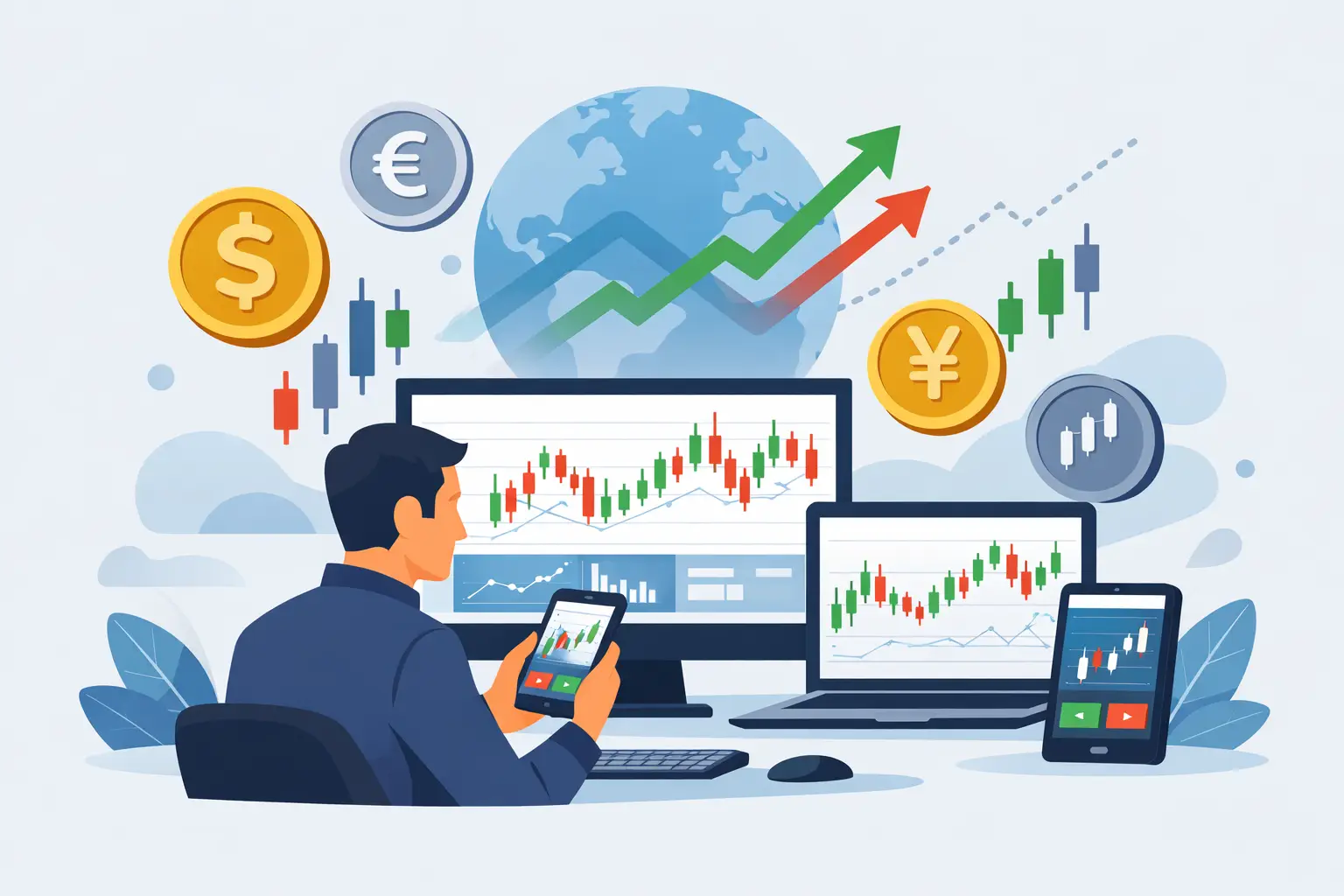
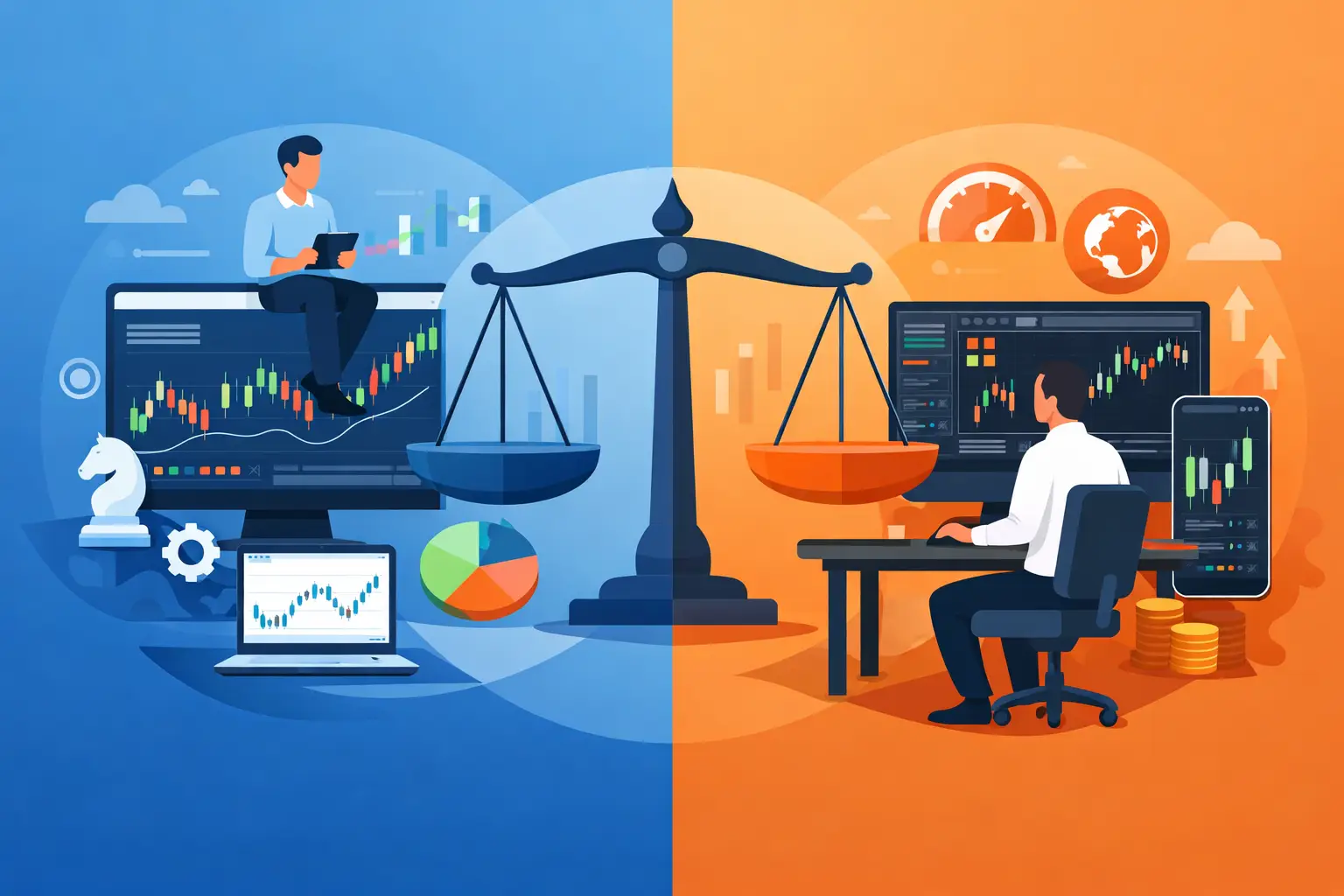
A trade can be well researched and still be poorly executed if the platform gets in the way. Price feeds, order controls, charting speed, available markets, and account functionality all affect what happens between a trading idea and an open position. That is why choosing among forex broker platforms is not simply a matter of picking the screen that looks best. It is a decision about how you access the market, manage risk, and build a repeatable trading process.
For active traders, the right setup should feel direct and dependable rather than complicated. For newer traders, it should make essential actions easy to understand without limiting room to grow. The strongest choice depends on your strategy, preferred instruments, experience level, and the conditions under which you trade.
What a Forex Trading Platform Actually Does
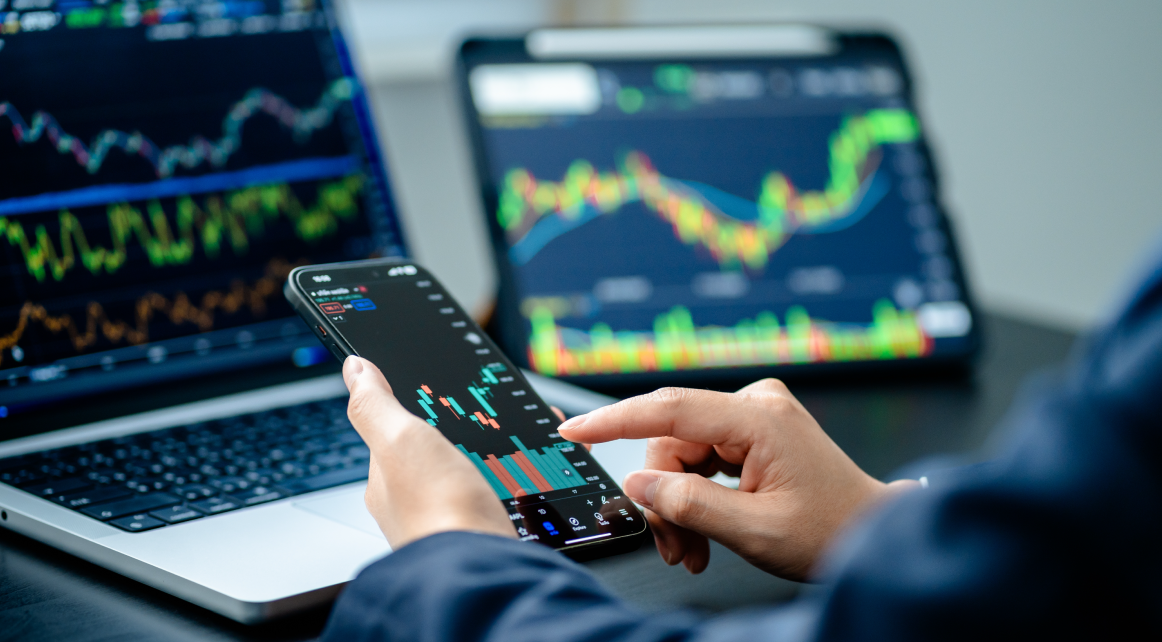
A broker platform is the working environment where you analyze prices, place trades, monitor margin, adjust orders, and review account activity. It connects a trader to the broker’s available markets and trading conditions. The platform itself does not guarantee trading outcomes, but it can materially influence the quality and speed of your decisions.
At a practical level, traders use platforms to view live charts, open and close positions, place pending orders, set stop-loss and take-profit levels, and track profit and loss. More advanced functionality may include technical indicators, algorithmic trading tools, depth-of-market views, trade alerts, multi-chart layouts, and detailed reporting.
The difference between platforms matters because traders do not all work the same way. A short-term trader may prioritize fast order entry and chart responsiveness. A swing trader may value multi-time-frame analysis and alerts. Someone interested in social participation may need copy trading or managed-account access. One platform rarely handles every use case equally well.
Choose Forex Broker Platforms Around Your Strategy
The best platform is not necessarily the one with the longest feature list. It is the one that supports the way you intend to trade without adding friction at critical moments.
For discretionary chart-based trading
Traders who rely on technical analysis often need flexible charting, a wide selection of indicators, drawing tools, and simple order management. MT4 remains familiar to many forex-focused traders because of its straightforward layout, broad use of Expert Advisors, and established indicator ecosystem. It can be a practical choice for traders who prefer a focused forex workflow and already use compatible tools.
MT5 expands the experience with more time frames, additional order types, deeper analytical features, and broader support for multi-asset trading. This can matter when your watchlist extends beyond currency pairs into indices, commodities, stock CFDs, or crypto CFDs. More features do not automatically make MT5 better for every trader, but they can provide useful flexibility as your strategy develops.
For advanced execution and market depth
cTrader appeals to traders who want a modern interface, detailed order controls, and tools designed around active execution. Its depth-of-market functionality can be particularly relevant for traders who want more visibility into available pricing levels. The platform also supports advanced charting and automated trading capabilities, while maintaining an interface that many users find intuitive.
Execution-focused traders should look beyond a platform’s appearance. Test how easily you can modify orders, partially close positions, calculate volume, and monitor margin. These details become more significant when markets move quickly or when you manage several positions at once.
For social and managed participation
Not every market participant wants to make every decision independently. Copy trading can allow users to follow selected strategy providers, while PAMM-style structures may offer a framework for managed trading participation. These options can broaden access, but they do not remove risk.
Past performance does not predict future results, and a strategy that looks attractive in a strong month may behave very differently in a changing market. Before allocating funds, review the provider’s trading history, drawdowns, risk profile, holding periods, and approach to position sizing. Copying a trade is easy. Understanding the risk you are copying takes more work.
The Platform Features That Deserve More Attention
Marketing often puts charts and indicators at the center of the conversation. Those are useful, but several operational features can have a larger impact on the day-to-day trading experience.
First, examine the order types available. Market orders, limit orders, stop orders, and protective stop-loss and take-profit settings give traders different ways to enter and exit positions. A platform should make these controls clear, especially when you need to respond quickly. Traders should also understand that stop-loss orders may be filled at a different price than requested in fast-moving conditions.
Second, consider mobile access. A mobile app is valuable for monitoring positions, receiving alerts, and responding to changes when you are away from your desk. It is not always the best environment for detailed analysis or complex trade planning. Many traders use desktop platforms for research and mobile platforms for position oversight, creating a more disciplined division between planning and reacting.
Third, look at account management. The ability to view balances, margin levels, transaction history, deposits, withdrawals, and account settings in one place reduces unnecessary friction. A trading ecosystem should make operational tasks straightforward so that users can focus on market decisions rather than searching for basic controls.
Finally, assess whether the available instruments match your interests. Forex may be your starting point, but access to CFDs on indices, commodities, crypto, and stocks can create more opportunities to follow different market themes. Broader access is useful only when it supports a defined plan. Trading more markets without a risk framework can simply increase exposure.
Execution, Spreads, and Leverage Are Part of the Platform Decision
A platform cannot be judged separately from the broker’s trading conditions. The interface is where you trade, but spreads, commissions, swaps, execution practices, margin requirements, and leverage shape the cost and risk of every position.
For example, a trader who holds positions overnight should pay close attention to swap charges or credits. A frequent intraday trader may focus more on spreads, commissions, and execution consistency. The right account structure depends on your volume, instruments, and holding period, not on a single headline number.
Alavancagem deserves particular care. It allows traders to control a larger position with a smaller amount of capital, which can increase market exposure quickly. That can create opportunity, but it also magnifies losses. A platform with clear margin information and accessible risk controls helps traders stay aware of exposure before a position becomes difficult to manage.
A useful habit is to calculate the financial risk of a trade before placing it. Define where the trade is invalidated, set the stop level, determine the position size, and confirm how much of your account is at risk. This process is more valuable than any indicator package.
Build a Setup You Can Use Consistently
The most capable platform will not help if your workflow changes every week. Start with a setup that fits your current trading approach, then use a demo environment or small, carefully controlled position sizes to learn its functions. Practice placing pending orders, adjusting stops, closing partial positions, and locating your margin information before relying on the platform during volatile conditions.
It also helps to separate platform features from strategy quality. Automated tools, custom indicators, and copy trading services can support a process, but none replaces risk management or independent judgment. If a feature is difficult to explain in plain language, do not commit capital to it until you understand how it works.
For traders who want platform choice across self-directed trading, automation, and social participation, a provider such as Monaxa can offer access to MT4, MT5, cTrader, and cTrader Copy within a broader multi-asset environment. The practical advantage is choice, but the responsibility remains with the trader to select the account, platform, and risk level that fit their objectives.
A Better Question Than “Which Platform Is Best?”
Instead of asking which platform is best overall, ask which one makes it easier for you to execute a defined plan. Your answer may change as you move from learning basic order placement to trading multiple markets, using automated strategies, or evaluating copy-based opportunities.
Take the time to compare the trading tools, account conditions, instruments, and risk controls behind the interface. A platform should give you clear access to the market, not encourage rushed decisions. When the technology supports your process instead of distracting from it, you are in a stronger position to trade with purpose.