 English
 Portuguese
 Bahasa
Melayu
Bahasa
Melayu ไทย
ไทย 中文
中文 Tiếng Việt
 Español
 हिन्दी
 日本語
日本語 العربية
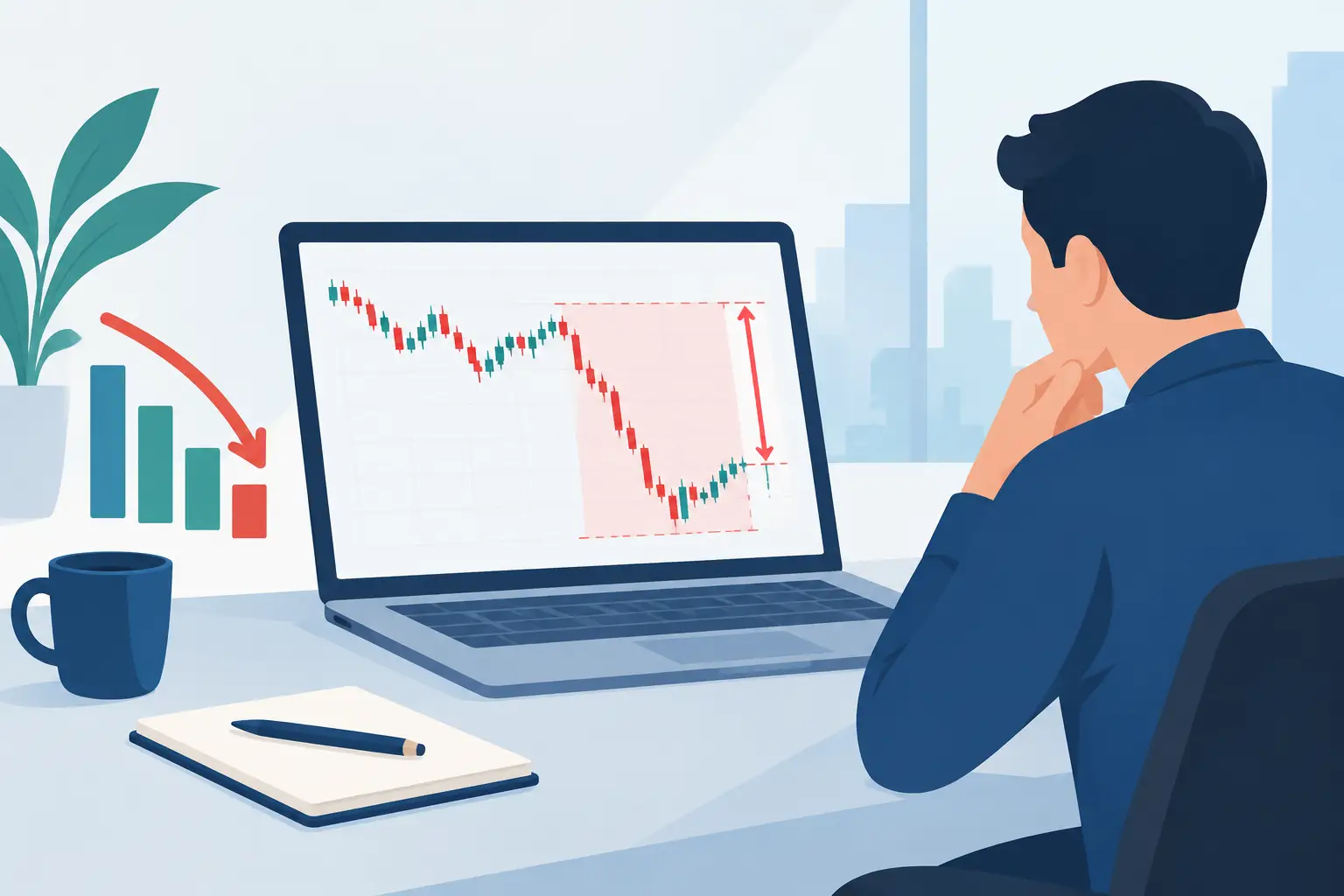
A chart can be rising, headlines can look positive, and yet buyers suddenly disappear. That gap between the facts and how traders feel about the facts is where market sentiment shows up. If you are asking what is market sentiment, the short answer is this: it is the overall mood of the market and the collective bias of traders toward a financial asset, sector, or market as a whole.
For active traders, sentiment matters because price does not move on data alone. It moves on expectations, fear, confidence, positioning, and urgency. In leveraged markets like forex, indices, commodities, crypto CFDs, and stock CFDs, those shifts can develop quickly and change the trading landscape in minutes.
What Is Market Sentiment?
Market sentiment describes whether participants broadly feel bullish, bearish, or uncertain. A bullish market sentiment means traders expect prices to rise. A bearish market sentiment means they expect prices to fall. Neutral or mixed sentiment usually means conviction is weak, and the market may stay range-bound until a stronger catalyst appears.
This is not the same as intrinsic value or economic reality. An asset can look cheap and still keep falling if sentiment is negative. It can also look expensive and continue rising if enough traders believe momentum has room to run. That is why sentiment is especially relevant for short-term and medium-term trading. It helps explain why prices often move ahead of confirmed fundamentals and why markets can overreact in both directions.
Why Market Sentiment Matters to Traders
Sentiment acts like a pressure gauge. It tells you whether the market is leaning heavily one way, whether traders are hesitant, or whether momentum is being driven by conviction or panic.
That can shape your decisions in several ways. First, it helps with timing. A strong technical setup has a better chance of following through when broader sentiment is aligned. Second, it helps with trade selection. If risk appetite is strong, traders may rotate into higher-beta assets and growth-sensitive instruments. If risk aversion takes over, money often shifts toward safer currencies, defensive sectors, or traditional haven assets.
It also helps with risk control. When sentiment is stretched, price can reverse sharply. A market that has become too one-sided is often vulnerable to profit-taking, headline shocks, or position unwinds. Reading sentiment does not remove risk, but it gives you more context for sizing, stops, and expectations.
What Drives Market Sentiment
Sentiment is shaped by a mix of hard data and human behavior. Economic releases matter, but so does how the market interprets them. A strong jobs report may lift sentiment if traders see it as supportive for growth. The same report could hurt sentiment if traders think it increases the odds of tighter monetary policy.
Central bank decisions are another major driver. Interest rate expectations affect currencies, indices, commodities, and broader risk appetite. Inflation data, GDP prints, corporate earnings, geopolitical tension, and policy changes can all shift sentiment fast.
Then there is market psychology. Traders react to fear of missing out, loss aversion, trend chasing, and crowd behavior. In practice, sentiment often becomes self-reinforcing. Rising prices improve confidence, which attracts more buyers, which pushes prices higher. The reverse also happens during selloffs.
This is why sentiment is not purely rational. It is a blend of information, interpretation, and positioning.
How to Read Market Sentiment
There is no single sentiment meter that gives perfect answers. Traders usually build a view by combining several signals.
Price action is the first place to look. Strong sentiment often shows up in persistent trends, clean breakouts, shallow pullbacks, and fast reactions to news. Weak or confused sentiment tends to produce choppy ranges, failed breakouts, and sharp reversals.
Volume and participation can add another layer. If a move is supported by strong participation, it may reflect broader conviction. If price is drifting higher on thin participation, the move may be less reliable.
News flow also matters. Ask whether the market is rewarding good news, ignoring it, or selling into it. If bullish headlines stop pushing price higher, that can be an early sign that positive sentiment is fading. If markets keep rising despite bad news, bullish sentiment may still be dominant.
Positioning tools can help too. Depending on the market, traders may look at sentiment surveys, volatility indexes, put-call ratios, commitment data, or retail positioning indicators. None of these should be used in isolation. They are most useful when they confirm or challenge what price is already showing.
Bullish, Bearish, and Contrarian Sentiment
Bullish and bearish sentiment are straightforward, but the real edge often comes from understanding extremes.
When sentiment is strongly bullish, traders may keep buying because they expect higher prices, stronger earnings, or improving economic conditions. Momentum strategies can work well in that environment. Still, there is a trade-off. The more crowded a bullish move becomes, the more fragile it can get if expectations are not met.
The same idea applies to bearish sentiment. Negative sentiment can fuel strong downside moves, especially when fear accelerates selling. But once pessimism becomes extreme, the market may be close to exhaustion. At that point, even slightly better news can trigger a sharp rebound.
This is where contrarian thinking comes in. Contrarian traders look for moments when sentiment has become too one-sided. They are not trying to guess every top or bottom. They are looking for cases where the crowd may have pushed price too far relative to realistic outcomes. That approach can work, but timing is difficult. Extreme sentiment can stay extreme longer than expected.
What Is Market Sentiment in Different Asset Classes?
Sentiment does not look the same across every market.
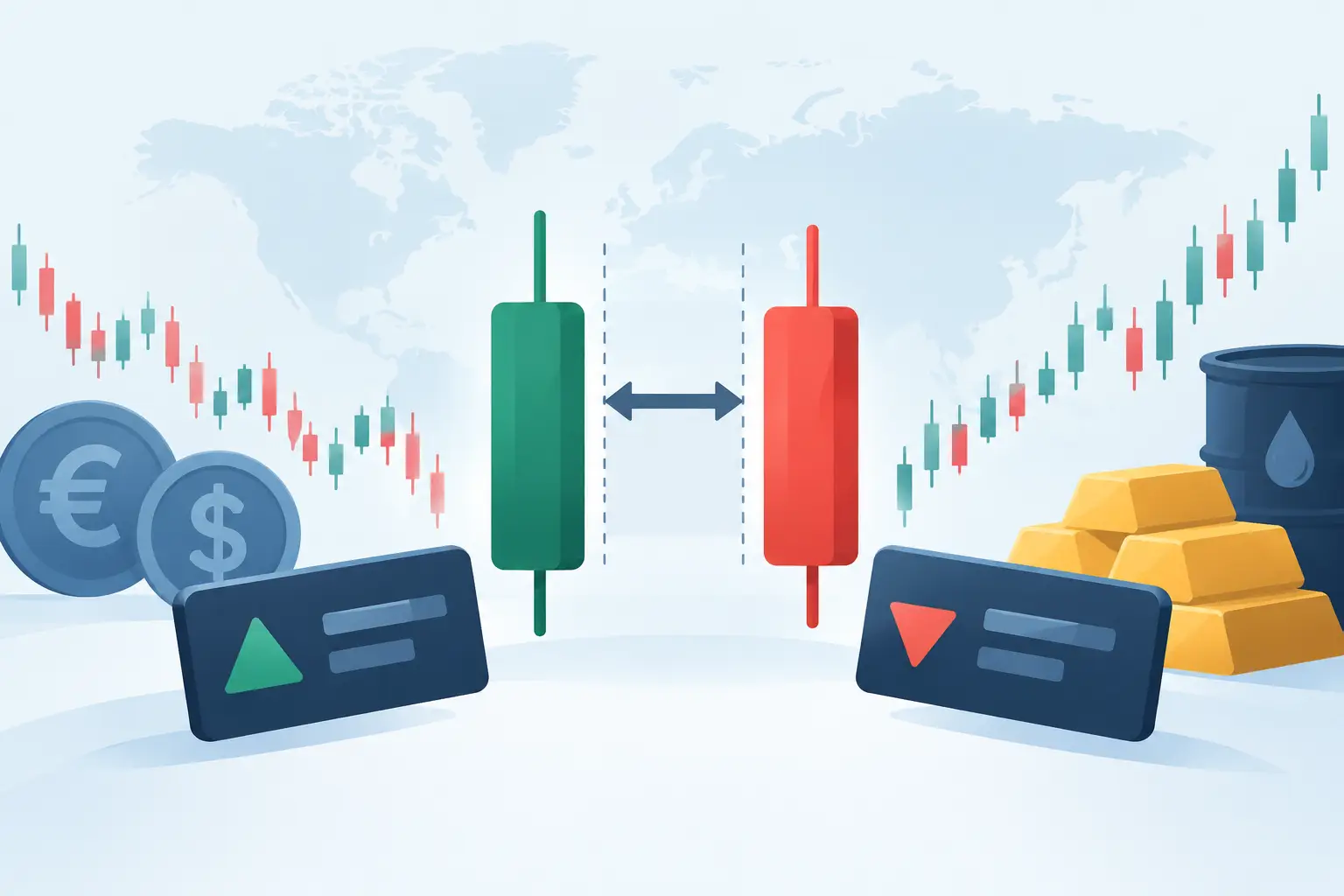
In forex, sentiment often reflects interest rate expectations, central bank outlooks, economic strength, and risk appetite. A currency can gain support because traders expect tighter policy, or weaken because growth fears are building.
In indices and stock CFDs, sentiment is closely tied to earnings expectations, sector rotation, valuation appetite, and macro confidence. A broad risk-on environment may support equity indices even when some individual data points are mixed.
In commodities, sentiment is often shaped by supply shocks, inflation views, industrial demand, and geopolitical developments. Oil and gold, for example, can respond to very different sentiment drivers.
In crypto CFDs, sentiment can shift especially fast. Momentum, regulation, liquidity conditions, and broader risk appetite can all have an outsized effect.
That matters because a trader should always read sentiment in context. A bullish setup in one market may be driven by risk appetite, while a bullish setup in another may be driven by inflation hedging or supply concerns.
How to Use Sentiment in a Trading Plan
Sentiment works best as a layer, not as a standalone strategy. It can help you frame the market, but it should be combined with technical structure, event awareness, and disciplined risk management.
Start by identifying the broader bias. Is the market behaving as risk-on, risk-off, or mixed? Then narrow the focus to your instrument. Is it moving with broad sentiment or diverging from it? That distinction matters. Sometimes divergence signals opportunity. Other times it signals weakness.
Next, line sentiment up with your setup. If you are trading breakouts, positive sentiment can support continuation. If you are fading extremes, stretched sentiment may support a reversal idea. In both cases, wait for price confirmation. Sentiment can tell you what the crowd is leaning toward, but price tells you whether that view is actually being expressed.
Finally, stay flexible. Sentiment can change quickly after economic releases, central bank commentary, or geopolitical headlines. Traders who adapt tend to preserve capital better than traders who become attached to one narrative.
For newer traders, this is where platform access and market visibility make a difference. The goal is not to predict every mood swing. The goal is to participate when conditions are clearer and step back when they are not.
Common Mistakes When Reading Sentiment
One common mistake is confusing sentiment with certainty. A market can look strongly bullish right before a reversal. Another is assuming good news must lead to higher prices. If expectations are already fully priced in, even strong news may not extend a move.
Traders also get into trouble by chasing crowded sentiment too late. When everyone is already positioned the same way, the upside may be limited while reversal risk grows. On the other hand, fading sentiment too early can be just as costly. A market can remain irrational longer than a trader can remain comfortable.
The better approach is balanced. Use sentiment to understand market pressure, then let structure, timing, and risk rules guide execution.
A Smarter Way to Think About Market Mood
If you want a practical answer to what is market sentiment, think of it as the market’s emotional temperature. It tells you whether traders are confident, defensive, aggressive, or undecided. That matters because markets are not moved by numbers alone. They are moved by how people react to those numbers.
For traders, sentiment is not a shortcut. It is an edge when used with discipline. Read the mood, respect the crowd, but do not follow it blindly. The best opportunities often come when you understand not just where price is moving, but why participants are motivated to keep pushing it there – or why they are about to stop.